
Halloween E-commerce Ad Trends: When to Scale Spend by Vertical

With Halloween campaigns driving millions in sales each year, the difference between profit and waste comes down to timing. Our data on Halloween E-commerce ad trends shows that scaling at the right moment, by vertical,can dramatically improve ROAS.

Last week, we analyzed CPA trends for Apparel & Accessories in the lead-up to Halloween. Now, we’re continuing the series with a focused look at three more verticals: Clothing, Health & Beauty, and Home & Garden.

Backed by insights from over 100 million E-commerce orders processed annually, and powered by our AI-driven analytics platform, this analysis uncovers real-time patterns across the global E-commerce landscape, delivering intelligent guidance to help brands optimize performance when it matters most.

The Goal: Maximize Conversions and Minimize CPA During Halloween Campaigns

For performance marketers, the sweet spot lies in maximizing conversions while keeping CPA low. That’s exactly what the following trends show, distinct windows when scaling makes financial sense and moments where holding spend protects your margins.

Let’s dig into each vertical.

Trend Summary:

  • Conversions spike sharply in late October
  • CPA is lowest between Oct 20–25, then climbs rapidly through the end of the month

The data shows an ideal intersection for Clothing E-commerce brands between October 20–25, this is when conversion volume peaks, and CPA is at its lowest. However, by Halloween, CPA increases significantly while conversions drop, making it inefficient to scale past October 25.
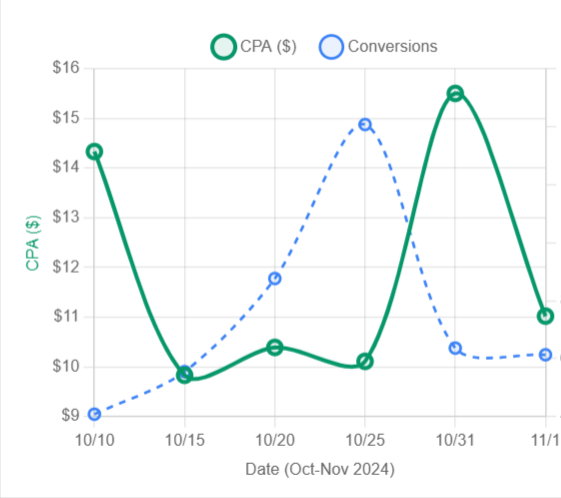
Halloween eCommerce ad trends - Graph showing low CPA and high conversions for Clothing vertical between October 20–25.
Figure 1: Clothing – CPA drops and conversions spike between Oct 20–25.

Recommendation:
👉 Front-load your budget and scale hard from Oct 20–25. Optimize creatives and offers before this window to maximize impact.

If you have limited budget, allocate a disproportionate share toward this five-day window to stretch ROAS.

Health & Beauty Halloween Campaign Strategy: Scale During Mid-to-Late October

Trend Summary:

  • Steady conversion growth from October into early November
  • CPA remains stable, with a slight dip right before Halloween

Unlike Clothing, Health & Beauty sees conversion volume build through mid-October, peaking around October 20, then tapering off slightly before Halloween. CPA stays relatively stable throughout the month, dipping just before Halloween, which makes October 15–25 a strong window to scale.
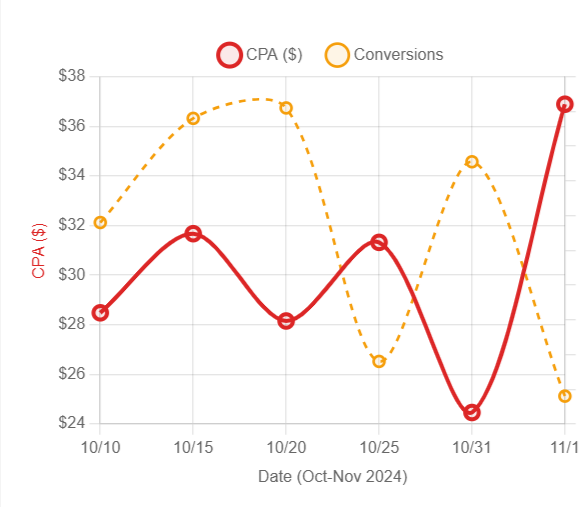
Halloween eCommerce ad trends - Graph showing stable CPA and rising conversion volume for Health & Beauty from early to late October.
Figure 2: Health & Beauty – Steady conversion growth and stable CPA into late October.

Recommendation:
👉 Scale ad spend between October 15–22. This is when conversion volume peaks and CPA remains stable, making it the most cost-effective window for Health & Beauty campaigns.

Home & Garden Halloween Ad Trends: Avoid Scaling in October

Trend Summary:

  • Conversion volume declines throughout October
  • CPA rises steadily, indicating diminishing returns

For Home & Garden brands, October is not the time to push. While there are historic conversion highs in March and September, the Halloween period tells a different story. From mid-October onward, conversions fall while CPA climbs, a clear sign to pull back budget and avoid waste.
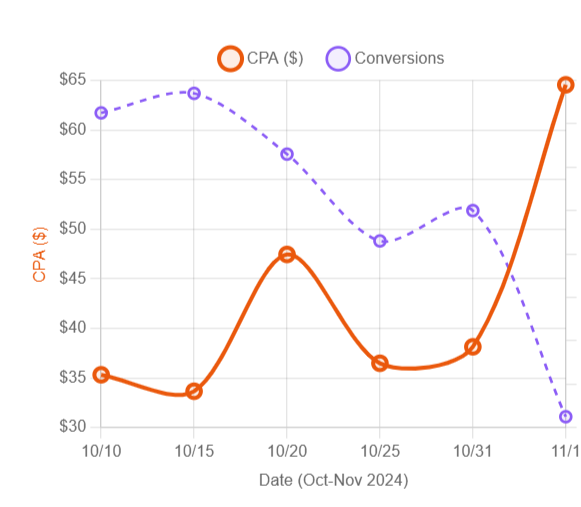
Halloween eCommerce ad trends - Graph showing decreasing conversion rates and increasing CPA for Home & Garden during October.
Figure 3: Home & Garden – Declining conversions and rising CPA leading up to Halloween.

Recommendation:
🚫 Hold all scaling efforts pre-Halloween. Instead, use this time to build lists, or test new creatives. Leverage organic and email marketing rather than paid acquisition during this period to preserve profitability.

Why Halloween Ad Timing Matters: Avoid Wasted Spend with Smarter Scaling

Many brands fall into the trap of “always-on” campaigns during seasonal moments. But these graphs make one thing clear: not all days in Q4 are created equal. Here’s why aligning spend to peak efficiency matters:

  • CPA Spikes Can Destroy ROAS: Especially in the days right after Oct 25, you’ll see diminishing returns unless you pause or adjust targeting.
  • Budget Fluidity Wins: Don’t stick to flat daily budgets. Use flexible pacing to push spend during high-converting, low-cost windows.

Halloween Ad Strategy by Vertical: What E-commerce Marketers Should Do Now
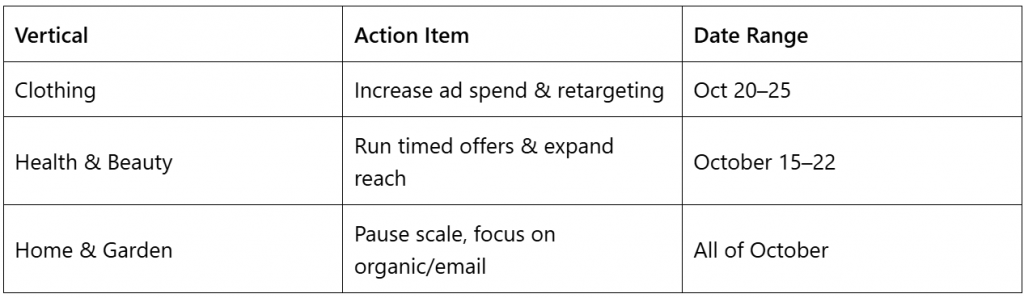
Final Takeaways: Optimize Halloween E-commerce Campaigns for Q4 ROI

Q4 is crowded, competitive, and costly. But data-driven decisions can cut through the noise. Here’s what you should remember:

  1. Follow the data, not the calendar. Just because it’s Halloween doesn’t mean it’s right for your vertical.
  2. Optimize your spend window. Clothing and Health & Beauty have a clear five-to-seven-day opportunity. Seize it.
  3. Avoid inefficient spend. Especially for Home & Garden, scaling now will lead to higher costs and lower returns.

Ready to Execute Your Halloween E-commerce Ad Strategy?

Don’t guess your way through the season. Use this data to build a performance marketing calendar that actually aligns with consumer behavior.

Need help planning your Q4 strategy? Our team can help you audit your ad accounts and identify peak efficiency periods tailored to your vertical.

Let’s talk.👉 Book a Free 15-Minute Consultation

When is the best time to scale Halloween ad spend for E-commerce brands?

The optimal time depends on your vertical. For Clothing, the best window is October 20–25. Health & Beauty sees peak conversions during October 15–22, while Home & Garden should avoid scaling in October altogether due to rising CPA and lower conversion volume.

What does the data say about Halloween conversion rates in E-commerce?

Conversion volume generally spikes in the final 10 days of October, especially for apparel and beauty products. However, CPA varies by vertical, meaning timing your budget matters more than simply spending more.

How can I lower CPA during the Halloween season?

To reduce CPA, align your ad spend with high-conversion windows (e.g., Oct 20–25 for Clothing), use retargeting campaigns, and avoid pushing spend during periods with poor return (like late October for Home & Garden).

Should I run Halloween campaigns for Home & Garden products?

Not aggressively. Based on the data, Home & Garden products see a decline in conversions and an increase in CPA in the weeks leading up to Halloween. It’s better to focus on organic content, email campaigns, or prep for Black Friday instead.
What Actually Happens to CPA During Halloween?

A Data-Driven Analysis for Apparel & Accessories Ecommerce Brands

Most ecommerce brands increase ad spend in the final days before Halloween, but the data shows this may be the least efficient move you can make. By analyzing CPA insights for Halloween campaigns, we’ve uncovered patterns that reveal a smarter, more cost-effective approach to seasonal advertising. In the Apparel & Accessories vertical, Halloween campaigns are often treated as high-priority sales opportunities. Budgets ramp up, creatives get refreshed, and urgency-based messaging takes over.

We process over 100 million eCommerce orders annually and have developed an AI-powered analytics platform that monitors trends and patterns across the global eCommerce landscape, delivering intelligent insights to optimize performance.

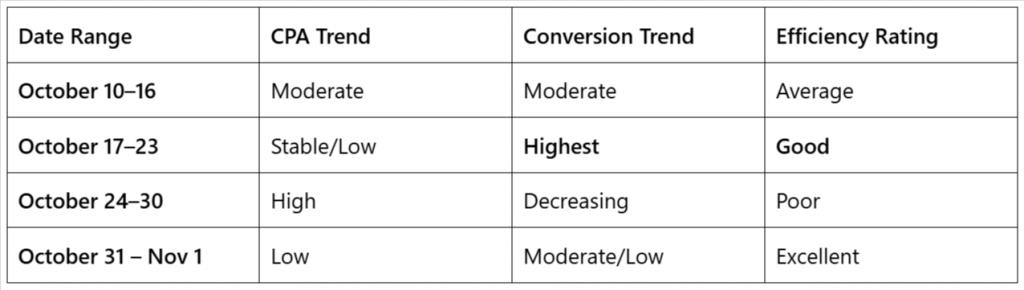
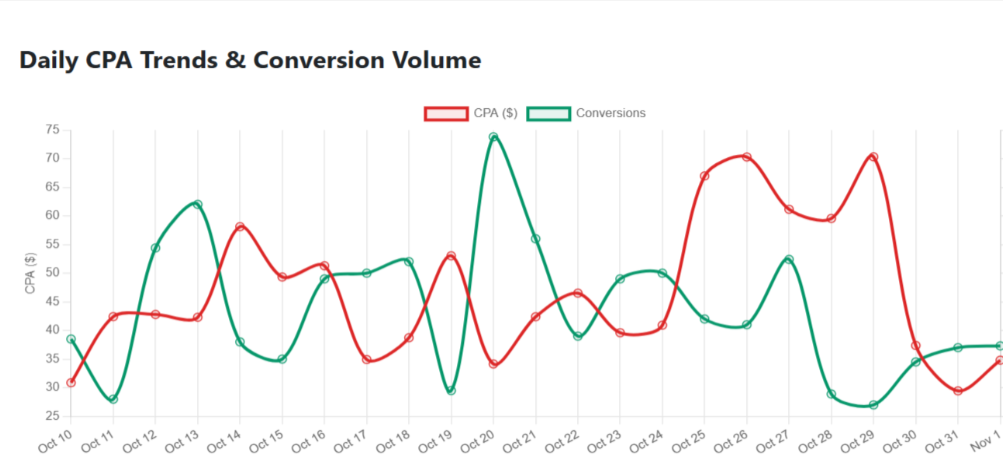
When we analyzed daily CPA and conversion data from October 10 through November 1, 2024, a surprising trend emerged:

The most efficient acquisition window happened 2 weeks before the final Halloween rush, specifically between October 17–23.

Below, we break down what actually happened, where performance peaked, and how you can use these insights to protect your Q4 budget and maximize returns.

The Challenge: Rising Costs, Declining Efficiency

In the week leading up to Halloween (October 24–30), average CPA rose significantly, while conversions dropped. This combination leads to a sharp decline in efficiency, meaning brands were paying more for fewer results.

By contrast, the period from October 17–23 delivered the highest conversion volume and lower acquisition costs, making it the most efficient advertising window of the Halloween season.

When is the Most Efficient Time to Advertise?

To clarify trends and help guide future planning, here’s a breakdown of CPA and conversion efficiency based on aggregated data from AdScale:

CPA insights for Halloween campaigns

The period of October 17–23 stands out as the most efficient, offering strong conversion volume at stable acquisition costs.
AdScale processes over 100 million ecommerce orders every year, giving us a reliable, real-world benchmark of how timing affects performance across the apparel and accessories vertical.

Strategic Takeaways for Apparel & Accessories Brands

To improve return on ad spend during Halloween, consider these data-backed actions:

1. Prioritize October 17–23 for Core Campaign Activity

  • Allocate a greater share of your October budget to this window
  • Launch promotions, scale top-performing ads, and push new arrivals during this time
  • This period offers the best trade-off between conversion intent and advertising cost

2. Reduce Broad Acquisition in Late October

  • From October 24–30, conversion efficiency drops as CPA climbs
  • Shift strategy to retargeting, owned media (email/SMS), or limited-time urgency offers
  • Monitor daily CPA performance to avoid overspending

3. Leverage November 1 for Clearance or Holiday Prep

  • CPA dips again immediately after Halloween
  • This is a great time to:
    • Clear remaining Halloween inventory
    • Launch early-access holiday sales
    • Retarget high-intent visitors from October campaigns

Final Thought

It’s easy to assume that Halloween week will deliver peak performance. But the data proves otherwise:

October 17–23 was the most efficient period to acquire customers, while the days leading up to Halloween were the most expensive and least effective.

Smart brands are not just reacting to the calendar, they’re responding to performance signals. If you want to make the most of your Q4 marketing budget, start by aligning spend with where true efficiency lives.

Book a Call or Follow Us for More Insights

This analysis was powered by AdScale’s ecommerce performance data, and we regularly publish findings like this to help brands make smarter marketing decisions.

👉 Want to stay ahead of ecommerce trends?
Book a call with our team to learn how AdScale can improve your performance, or follow us to get the latest insights as soon as they’re published.

CPA insights for Halloween campaigns FAQs

Why do CPA rates increase right before Halloween for ecommerce brands?

CPA rates tend to rise in the final days before Halloween due to higher competition for ad placements, increased demand, and saturation of audience attention. This drives up costs while conversions often drop.

What is the best time to run Halloween ads for apparel and accessories brands?

Based on AdScale’s 2024 data, the most efficient time to advertise was October 17–23, when CPA was low and conversion volume peaked.

How can ecommerce brands improve ad efficiency during Halloween?

Brands can improve efficiency by shifting spend earlier in October, focusing on retargeting in the final week, and using post-Halloween periods (Nov 1 onward) for clearance and early holiday campaigns.

Which State Has the Highest AOV? Spoiler: Not California

Think California tops the charts for online shopping spend? Not quite. When you look at the average order value by state, the real big spenders are hanging out in flip-flops.

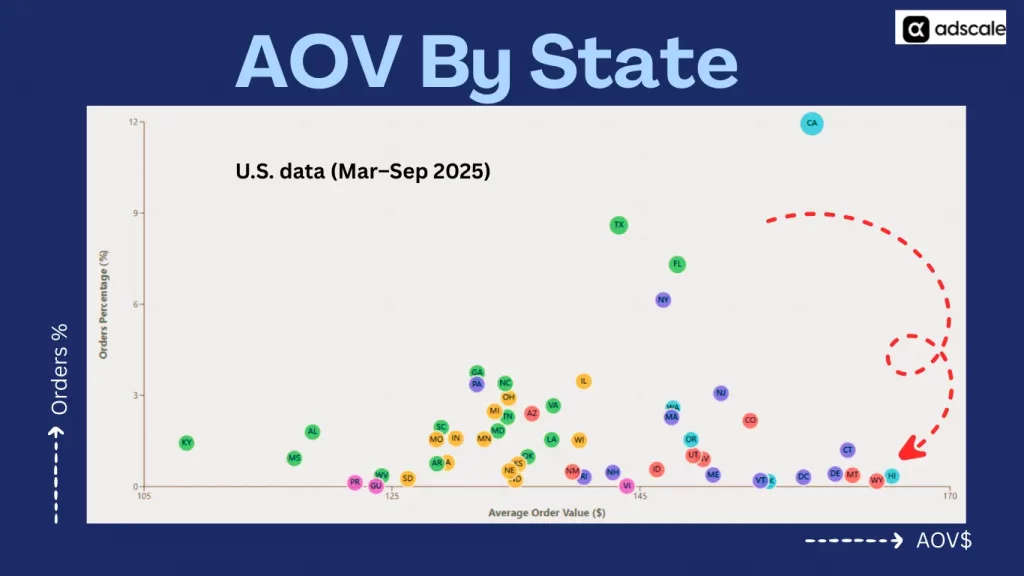
Hawaii leads the pack beating out even high-rollers in California, New York, and Connecticut. According to Adscale’s U.S. data (Mar–Sep 2025), island shoppers drop more cash per order than anyone else in the country.

TL;DR: Which U.S. States Spend the Most Per Order?

Summary: What This Data Reveals (Average Order Value by State)

State/RegionAOVOrder ShareOpportunity Type
HIHighestLowPremium targeting
CAHighHighestScaling & volume
TX / FLStrongHighBalanced acquisition
CT, DC, WYHighLowLuxury remarketing
MS, KY, ALLowLowLow-priority for paid

Based on Adscale’s U.S. data (Mar–Sep 2025).

And yet, it ranks near the bottom in terms of total orders. So what does this mean for eCommerce brands?

It means bigger doesn’t always mean better. If your marketing strategy is focused only on high-volume states, you might be overlooking markets where fewer shoppers spend far more.

We analyzed data from across the U.S. to map out:

  • 💸 Average Order Value (AOV) by state
  • 📦 Order Share (%) – how many purchases each state contributes
  • 🔵 Revenue Impact – shown by bubble size in the chart
  • 🎨 Regional clustering – to identify geographic trends

Here’s what we found.

The Chart: U.S. States by Average Order Value vs. Order Share

Below is a bubble chart of the average order value by state versus order share and revenue impact.

Chart showing average order value by state for US eCommerce
How to read this chart
  • X-axis = Average Order Value ($)
  • Y-axis = % of total orders
  • Bubble size = % of total revenue
  • Colors = U.S. regions (Pacific, South, Northeast, etc.)
  • Label = State abbreviation
Source: Adscale’s U.S. data (Mar–Sep 2025)

Top Insights: It’s Not Just About Order Volume

1. Hawaii (HI) = Highest AOV in the U.S.

  • AOV: ~$166
  • Order Share: Very low
  • Revenue Bubble: Modest
  • Takeaway: Hawaii residents spend more per order than anyone else, making them ideal for high-ticket products, luxury brands, or bundled offers.

2. California (CA) = Order Volume + Revenue Powerhouse

  • Order Share: ~12% (highest in the country)
  • AOV: Solid (~$159)
  • Takeaway: California combines massive volume with above-average cart size. It’s your scaling state, ideal for broad campaigns.

3. Texas (TX) & Florida (FL) = High Volume, Strong AOV

  • Both states rank high in order share
  • AOV is comfortably above national median
  • Takeaway: These states are excellent for repeatable, scalable growth, especially for broad-appeal products.

4. Connecticut (CT), Wyoming (WY), DC = High AOV, Low Order Share

  • These smaller states have AOVs approaching Hawaii’s
  • Order volume is low, but revenue per order is strong
  • Takeaway: Perfect for targeted premium campaigns — think gifting, subscription upgrades, or personalized services.

5. Mississippi (MS), Kentucky (KY), Alabama (AL) = Low AOV + Low Order Share

  • Bottom-left cluster on the chart
  • Lower cart sizes and low transaction counts
  • Takeaway: These are low-priority states unless you’re running a low-CAC, high-volume strategy.

How to Use This Data in Your eCommerce Strategy

This chart isn’t just interesting – it’s actionable. By looking at the average order value by state, you can uncover smarter ways to boost revenue, improve ROAS, and scale more efficiently:

✅ 1. Segment Campaigns by Buyer Value

Don’t treat every state the same. Run geo-segmented campaigns like:

  • High-AOV states (HI, CT, DC): Push luxury bundles, upsells, and premium products
  • High-volume states (CA, TX, FL): Focus on acquisition, cart optimization, and loyalty
  • Low-volume/value states: Use for offer testing or long-tail SEO content

✅ 2. Adjust Ad Spend by Geo Performance

If your CAC is rising, look at where your budget is going. Consider:

  • Down-bidding in states with low AOV and low conversion
  • Increasing spend in high-AOV, underutilized markets like CT or DC
  • Retargeting in Texas and California for scale + LTV growth

✅ 3. Personalize Offers by State

Use geo-detected offers in email/SMS:

  • “Aloha, Hawaii! Enjoy free shipping on your luxury haul.”
  • “Texas shoppers are loving this bundle – grab yours today.”
  • “New Yorkers, this deal is just for you.”

Personalization by location can lift CTRs and conversions significantly.

✅ 4. Rethink Product Strategy by Region

Are your higher-priced SKUs converting in high-AOV states? If not, start testing:

  • Add price-based filtering by location
  • Run region-specific product recommendations
  • Use this data in new product development for regional needs

Real Example: How a Skincare Brand Could Use This

Let’s say you sell a line of skincare products, AOV ~$65:

  • In Hawaii, you promote your 3-pack bundles or luxury facial kits
  • In California, you run a standard full-funnel DTC ad campaign
  • In Mississippi, you promote your budget line or samples

Suddenly, your CAC is lower, your AOV is rising, and your retention improves, just by aligning state-level behavior with your marketing plan.

Ready to Unlock State-Level Growth for Your Store?

We help eCommerce brands go beyond channels and creatives – into data-backed geographic segmentation that scales efficiently.

👉 Book a free strategy call to:

  • Find your high-AOV regions
  • Reduce wasted spend on low-value states
  • Geo-target campaigns for better ROAS

Why Your Ecommerce Business Needs AI in Advertising

In the ever-evolving world of digital marketing, staying ahead of the curve is crucial for success. As businesses compete for attention in an increasingly crowded online space, the need for smarter, more efficient advertising strategies has never been greater. Enter artificial intelligence (AI), a game-changing technology that is revolutionizing the way we approach advertising. At AdScale, we’ve seen firsthand how AI can transform campaigns, delivering better results with less effort. In this post, we’ll explore the key benefits of incorporating AI into your advertising strategy and why your business should embrace this powerful tool.

1. Precision Targeting: Reaching the Right Audience

One of the most significant advantages of AI in advertising is its ability to analyze vast amounts of data to identify and target the right audience. Traditional methods of audience targeting often involve a degree of guesswork, relying on broad demographics and basic user behaviors. AI, on the other hand, can dig deeper into user data, uncovering patterns and preferences that may not be immediately obvious.

With AI, you can create highly specific audience segments based on factors such as browsing history, purchase behavior, social media interactions, and even real-time location data. This precision targeting ensures that your ads are seen by the people most likely to engage with your brand, resulting in higher conversion rates and a better return on investment (ROI).

2. Automated Campaign Optimization: Save Time and Boost Results

Running successful ad campaigns requires constant monitoring and adjustment, which can be time-consuming and labor-intensive. AI can take on much of this burden, automatically optimizing your campaigns in real time to ensure they’re performing at their best.

AI-powered tools can analyze performance data across multiple channels, identifying which ads are working and which aren’t. They can then make data-driven adjustments—such as reallocating budgets, adjusting bids, or tweaking ad creatives—without the need for manual intervention. This level of automation allows your marketing team to focus on strategic planning and creative development, while AI handles the nitty-gritty details of campaign management.

One of the most exciting aspects of AI is its ability to predict future trends and opportunities based on historical data. Predictive analytics uses AI to analyze past behaviors, market trends, and external factors to forecast future outcomes. For advertisers, this means being able to anticipate shifts in consumer behavior, identify emerging market trends, and make proactive adjustments to your strategy.

For instance, AI can help you identify when certain products are likely to see a surge in demand, allowing you to ramp up your advertising efforts ahead of time. By staying ahead of the curve, you can capitalize on opportunities before your competitors even realize they exist.

4. Cost Efficiency: Maximizing Your Advertising Budget

AI can also help you get more bang for your buck by ensuring that your advertising budget is spent as efficiently as possible. Through real-time bidding and budget optimization, AI-driven platforms like AdScale can automatically allocate your budget to the highest-performing ads and channels. This means you’re not wasting money on underperforming campaigns or overpaying for ad placements.

Additionally, AI’s ability to target the right audience means that your ads are more likely to convert, further improving your ROI. By reducing waste and increasing efficiency, AI helps you make the most of every dollar spent on advertising.

5. Scalability: Growing Your Campaigns with Ease

As your business grows, so do your advertising needs. Managing larger, more complex campaigns can be challenging, especially when expanding into new markets or channels. AI makes it easy to scale your campaigns without losing effectiveness or control.

AI-powered platforms can handle large volumes of data and manage multiple campaigns simultaneously, all while maintaining optimal performance. Whether you’re launching a new product, expanding into a new region, or simply increasing your ad spend, AI allows you to scale up quickly and confidently.

6. Actionable Insights: Making Smarter Decisions

Finally, AI provides you with actionable insights that can inform your overall marketing strategy. By analyzing the performance of your ads, AI can identify patterns and trends that might otherwise go unnoticed. These insights can help you understand what’s working, what’s not, and where there are opportunities for improvement.

With AI, you’re not just getting raw data—you’re getting meaningful insights that can guide your decision-making and help you craft more effective advertising strategies.

Conclusion: The Future of Advertising is AI-Driven

AI is not just a buzzword—it’s a powerful tool that is transforming the advertising landscape. From precision targeting and automated optimization to predictive analytics and cost efficiency, the benefits of AI in advertising are clear. By embracing AI, your business can stay ahead of the competition, maximize ROI, and deliver more impactful advertising campaigns.

At AdScale, we’re passionate about helping businesses harness the power of AI to achieve their advertising goals. Our AI-driven platform is designed to optimize every aspect of your campaigns, from targeting and creative development to budget allocation and performance analysis. If you’re ready to take your advertising to the next level, contact us today to learn how we can help.

Remember, the future of advertising is here—and it’s powered by AI. Don’t get left behind—start leveraging AI in your advertising strategy today.

Overcoming the Challenges of a Poor Agency Experience: A Path to Better Advertising Results

If you’ve ever worked with a marketing agency that didn’t meet your expectations, you know how frustrating and disheartening the experience can be. Whether it’s a lack of transparency, poor communication, or underwhelming results, a poor agency experience can leave you feeling like you’ve wasted time and money. At AdScale, we’ve heard countless stories from businesses that have struggled with their agency partnerships, and we’re here to offer guidance on how to overcome these challenges and achieve the advertising results you deserve.

The Common Issues with Agency Experiences

While every agency relationship is unique, there are some common issues that often arise when things don’t go as planned. Here are a few of the most frequent complaints we’ve encountered:

1. Lack of Transparency

Transparency is crucial in any business relationship, but it’s especially important when it comes to your marketing efforts. Many businesses report feeling left in the dark by their agencies, unsure of where their money is going, what strategies are being implemented, or why certain decisions are being made. This lack of transparency can erode trust and lead to dissatisfaction with the partnership.

2. Poor Communication

Effective communication is the foundation of a successful agency-client relationship. Unfortunately, poor communication is a common issue that can result in misunderstandings, missed deadlines, and unmet expectations. When an agency fails to keep you informed or doesn’t listen to your needs, it can leave you feeling neglected and frustrated.

3. Unmet Expectations

When you hire an agency, you expect results. However, many businesses find that the outcomes don’t match the promises made during the sales pitch. Whether it’s a lack of ROI, subpar creative work, or ineffective strategies, unmet expectations can make you question the value of the agency relationship.

4. Rigid Processes and Lack of Flexibility

Agencies often have established processes for managing campaigns, but when these processes are too rigid, they can stifle creativity and limit the ability to adapt to your unique business needs. A lack of flexibility can lead to cookie-cutter solutions that don’t fully address your specific goals or challenges.

5. High Costs with Low ROI

One of the most significant pain points for businesses is the high cost of agency services, especially when the return on investment (ROI) is low. When you’re investing heavily in your marketing efforts, you expect to see results. If those results don’t materialize, it can be a major blow to your business.

How to Move Forward After a Poor Agency Experience

If you’ve had a less-than-ideal experience with an agency, it’s important not to let it deter you from pursuing your marketing goals. Here’s how you can move forward and set yourself up for success:

1. Assess What Went Wrong

Take a step back and evaluate the issues that led to the poor experience. Was it a lack of communication? Were the strategies misaligned with your goals? Understanding the root causes will help you avoid similar pitfalls in the future.

2. Set Clear Expectations from the Start

When entering into a new agency relationship, it’s crucial to set clear expectations from the outset. Define your goals, timelines, and key performance indicators (KPIs) to ensure that both you and the agency are on the same page. Regular check-ins and progress reports can help maintain alignment throughout the partnership.

3. Prioritize Transparency and Communication

Look for an agency or platform that values transparency and open communication. At AdScale, we believe in keeping our clients informed every step of the way. We provide detailed reports and insights so you always know how your campaigns are performing and where your budget is being allocated.

4. Seek Data-Driven Solutions

One of the best ways to ensure that your marketing efforts are on the right track is to rely on data-driven solutions. AI-powered platforms like AdScale use advanced analytics to optimize your campaigns in real time, ensuring that your strategies are based on data rather than guesswork. This approach not only improves ROI but also builds confidence in the results.

5. Consider In-House or Hybrid Solutions

If you’ve been burned by a traditional agency model, you might want to explore in-house or hybrid solutions. Bringing certain aspects of your marketing in-house can give you more control and visibility. Alternatively, a hybrid model where you use an AI-driven platform in conjunction with a smaller agency or internal team can offer the best of both worlds—expertise and flexibility.

6. Don’t Be Afraid to Make a Change

If your current agency isn’t delivering, don’t be afraid to make a change. Your business deserves a partner that is committed to your success. Whether switching agencies or adopting a new approach, making a change can be the first step toward achieving better results.

Conclusion: Turning a Poor Agency Experience into a Learning Opportunity

A poor agency experience doesn’t have to be the end of your marketing journey. By reflecting on what went wrong and taking proactive steps to find a better solution, you can turn a negative experience into a valuable learning opportunity. At AdScale, we’re committed to helping businesses overcome the challenges of poor agency experiences by offering transparent, data-driven solutions that deliver accurate results.

If you’re ready to leave behind the frustrations of a poor agency experience and move toward a more successful future, we’re here to help. Contact us today to learn how our AI-powered platform can transform your advertising efforts and help you achieve your business goals.

Remember, the right partner can make all the difference. Don’t settle for less—invest in a solution that truly understands and supports your growth.

Are My Creatives Good Enough? How to Evaluate and Improve Your Ad Campaigns

In the fast-paced world of digital advertising, your ad creatives are your first and often only chance to capture your audience’s attention. But how do you know if your creatives are truly up to the mark? Are they engaging, persuasive, and optimized to convert? As a marketer or business owner, it’s natural to question the effectiveness of your ad creatives. At AdScale, we understand the importance of getting this right, and we’re here to help you evaluate and improve your ad creatives to ensure they deliver the results you need.

Why Ad Creatives Matter

Before diving into how to assess your creatives, it’s essential to understand why they matter so much. Your ad creative is more than just a visual or a catchy phrase—it embodies your brand’s message and is the key driver of your campaign’s success. Effective creatives can:

  • Grab Attention: In a crowded digital space, your creative needs to stand out and capture your audience’s attention in seconds.
  • Communicate Value: Your creative must clearly convey the value of your product or service, making it immediately apparent why someone should care.
  • Drive Action: Ultimately, the goal of any ad is to drive action, whether that’s clicking a link, making a purchase, or signing up for a newsletter. Good creatives compel users to take the desired next step.

How to Evaluate Your Ad Creatives

So, how do you know if your ad creatives are hitting the mark? Here are some key factors to consider:

1. Relevance to Your Audience

Your ad creatives should speak directly to your target audience. Ask yourself: Are the visuals, messaging, and tone aligned with the interests and needs of the people you’re trying to reach? If your creatives aren’t resonating with your audience, they’re unlikely to perform well.

2. Clarity of Message

Is your message clear and concise? In digital advertising, simplicity is often key. Your audience should be able to understand your message at a glance. Avoid cluttered visuals and overly complex language that can confuse or distract from your main point.

3. Strong Call to Action (CTA)

Every ad should have a clear and compelling call to action. Whether it’s “Shop Now,” “Learn More,” or “Sign Up Today,” your CTA should be prominent and encourage immediate action. If your creatives lack a strong CTA, your audience may not know what to do next.

4. Visual Appeal

Aesthetics matter. Your creatives should be visually appealing and professionally designed. Poor-quality images, inconsistent branding, or unappealing colors can negatively impact how your ad is perceived. High-quality visuals that align with your brand identity are essential for building trust and driving engagement.

5. Alignment with Brand Identity

Your creatives should be consistent with your overall brand identity. This includes using your brand’s colors, fonts, and tone of voice. Consistency helps build brand recognition and trust, making your audience more likely to engage with your ads.

6. Performance Metrics

Finally, the ultimate test of your ad creatives is their performance. Key metrics like click-through rate (CTR), conversion rate, and engagement rate can provide valuable insights into how well your creatives resonate with your audience. If these metrics are lower than expected, it may be time to revisit your creatives.

How to Improve Your Ad Creatives

If your creatives aren’t performing as well as you’d like, don’t worry—there are plenty of ways to improve them. Here are some actionable tips:

1. Test Different Variations

One of the best ways to improve your ad creatives is through A/B testing. Create multiple versions of your ads with different visuals, copy, and CTAs to see which performs best. Use the insights gained from these tests to refine your creatives and optimize for better performance.

2. Focus on Your Unique Selling Proposition (USP)

Your USP is what sets you apart from your competitors. Make sure your creatives highlight this unique value. Whether it’s a special feature, a competitive price, or an exclusive offer, your USP should be front and center in your ads.

3. Keep It Fresh

Stale creatives can lead to ad fatigue, making your audience less responsive to your ads over time. Regularly update your creatives to keep your campaigns fresh and engaging. This could involve changing visuals, tweaking messaging, or introducing new CTAs.

4. Leverage User-Generated Content

User-generated content (UGC) can add authenticity to your ads. Featuring real customers using your products or sharing their experiences can make your ads more relatable and trustworthy, leading to higher engagement and conversions.

5. Use Data-Driven Insights

At AdScale, we believe in the power of data. Use performance metrics and analytics to guide your creative decisions. By understanding what’s working and what’s not, you can make informed adjustments to your creatives that are more likely to drive results.

Conclusion: Continuously Optimize for Success

Your ad creatives are a critical component of your digital marketing strategy, and ensuring they’re up to par is essential for achieving your goals. By regularly evaluating your creatives and making data-driven improvements, you can maximize their effectiveness and boost your campaign performance.

At AdScale, our AI-powered platform helps you optimize your ad creatives by providing insights and recommendations based on real-time data. If you’re ready to take your ad performance to the next level, we’re here to help. Contact us today to learn how we can support your creative optimization efforts and drive better results for your business.

Remember, great ad creatives aren’t just about looking good—they’re about delivering results. With the right approach, you can create ads that not only catch the eye but also convert.

Overcoming the Fear of Investing in Growth: A Guide for Ecommerce Businesses

In the dynamic world of ecommerce, growth is often seen as the ultimate goal. Yet, despite the potential rewards, many ecommerce businesses find themselves hesitant to invest in their own growth. Whether it’s fear of the unknown, concerns about financial risk, or uncertainty about where to allocate resources, these fears can hold your business back from reaching its full potential. At AdScale, we understand the challenges that come with scaling an ecommerce business, and we’re here to help you navigate through those fears and take confident steps toward growth.

Understanding the Fear

Before we dive into strategies for overcoming this fear, it’s important to understand where it comes from. Here are some common reasons why ecommerce businesses might be hesitant to invest in growth:

1. Financial Risk

One of the biggest concerns is the financial risk involved. Investing in growth often requires significant upfront costs, whether for new inventory, marketing campaigns, or technology upgrades. The fear that these investments won’t pay off can be paralyzing.

2. Fear of Failure

The fear of failure is a powerful deterrent. Many business owners worry that their growth efforts will not succeed, leading to wasted resources and potentially damaging their brand’s reputation. This fear can lead to a ‘play it safe’ mentality, where businesses choose to stick with what’s familiar rather than taking risks.

3. Uncertainty About ROI

In ecommerce, it’s not always easy to predict the return on investment (ROI) of growth initiatives. This uncertainty can make business owners reluctant to commit to spending money on something that may not deliver immediate or obvious results.

4. Lack of Expertise

Scaling an ecommerce business often requires knowledge and skills that go beyond day-to-day operations. The complexity of digital marketing, supply chain management, and customer acquisition can be intimidating, leading to hesitation in pursuing growth opportunities.

Why Growth is Essential for Ecommerce Success

While the fears mentioned above are understandable, it’s important to remember that growth is essential for long-term success in the competitive ecommerce landscape. Here’s why:

1. Staying Competitive

The ecommerce market is continuously evolving, with new players entering the scene and consumer expectations constantly changing. Without growth, your business risks falling behind competitors who are more aggressive in their expansion efforts.

2. Increasing Revenue Streams

Investing in growth opens up new revenue streams. Whether it’s through expanding product lines, entering new markets, or enhancing your online presence, growth initiatives can lead to increased sales and profitability.

3. Building Brand Equity

Growth isn’t just about making more money; it’s also about building your brand’s reputation and equity. A well-executed growth strategy can elevate your brand in the eyes of consumers, leading to greater customer loyalty and long-term success.

4. Leveraging Economies of Scale

As your business grows, you can benefit from economies of scale. This means reduced costs per unit as you produce and sell more, improving your overall profitability and giving you more flexibility to invest in further growth.

Overcoming the Fear: Strategies for Confident Growth

So, how can you overcome the fear of investing in growth? Here are some strategies to help you move forward with confidence:

1. Start with a Clear Plan

A well-defined growth strategy is key to minimizing risk. Start by setting clear goals and outlining the steps needed to achieve them. Consider all aspects of your business, from marketing and sales to logistics and customer service. Having a roadmap in place will give you the confidence to invest in the right areas.

2. Test and Learn

You don’t have to dive into growth headfirst. Instead, adopt a test-and-learn approach. Start with smaller, controlled experiments to gauge the potential of different growth strategies. For example, run a targeted marketing campaign in a new market before committing to a full-scale launch. This approach allows you to make data-driven decisions and reduce the risk of costly mistakes.

3. Utilize Data and AI

One of the best ways to reduce uncertainty about ROI is to leverage data and AI-powered tools like AdScale. By analyzing your existing data, you can identify trends, customer behaviors, and areas of opportunity. AI can help you predict outcomes and optimize your campaigns for maximum impact, giving you a clearer picture of what to expect from your growth investments.

4. Seek Expert Guidance

If lack of expertise is holding you back, consider seeking guidance from experts. Whether it’s hiring experienced staff, consulting with industry professionals, or partnering with a growth-focused platform like AdScale, having the right support can make all the difference. Experts can provide valuable insights, best practices, and strategies that are tailored to your business.

5. Manage Financial Risk

To mitigate financial risk, start by setting a budget for your growth initiatives that aligns with your overall business goals. Monitor your spending closely and adjust as needed based on the performance of your growth efforts. Additionally, consider exploring financing options that can help spread out the cost of growth investments over time, reducing the immediate financial burden.

Conclusion: Embrace Growth with Confidence

Investing in growth is not without its challenges, but the rewards can far outweigh the risks when done strategically. By understanding the common fears associated with growth and implementing practical strategies to address them, your ecommerce business can thrive in an increasingly competitive market.

At AdScale, we’re committed to helping ecommerce businesses like yours overcome growth challenges and achieve lasting success. Our AI-driven solutions are designed to optimize your marketing efforts, drive revenue, and give you the confidence to invest in your future. If you’re ready to take the next step in your growth journey, contact us today to learn how we can help.

Remember, growth isn’t something to fear—it’s an opportunity to reach new heights and unlock your business’s full potential.

How to Maximize Acquisition and Retention with Stellar Customer Experience

Customers are veery sensitive to negative experiences. In fact, 32% say that even one lousy interaction would make them abandon a brand they love. And that’s natural; people like to be heard and respected.

For example, you call the support service, and you’re put on hold. How long will it take before you start cursing? How about 15 hours? Yep, once upon a time, a persistent customer was put on hold for two hours. Frustrated, he decided to wait and see how long they could keep him on the line. Finally, 15 hours later, they answered and informed him that his request was denied due to an error.

What he felt at that moment is called a bad customer experience. And support is only one touchpoint where your clients might opt out. In this article, we will explore crucial practices for designing winning CX strategies, like support, SMM, an in-depth database of knowledge, and much more. So let’s start!

Why Customer Acquisition and Retention Are Essential for Your Business

Acquiring new customers is vital to maintaining growth, while retaining existing customers ensures a stable revenue stream. Thus, finding a balance is crucial.

This is precisely what a customer experience strategy can help with. In plain language, the CX is how customers feel about a brand based on all their interactions, including product quality, customer service, website/app usability, and more.

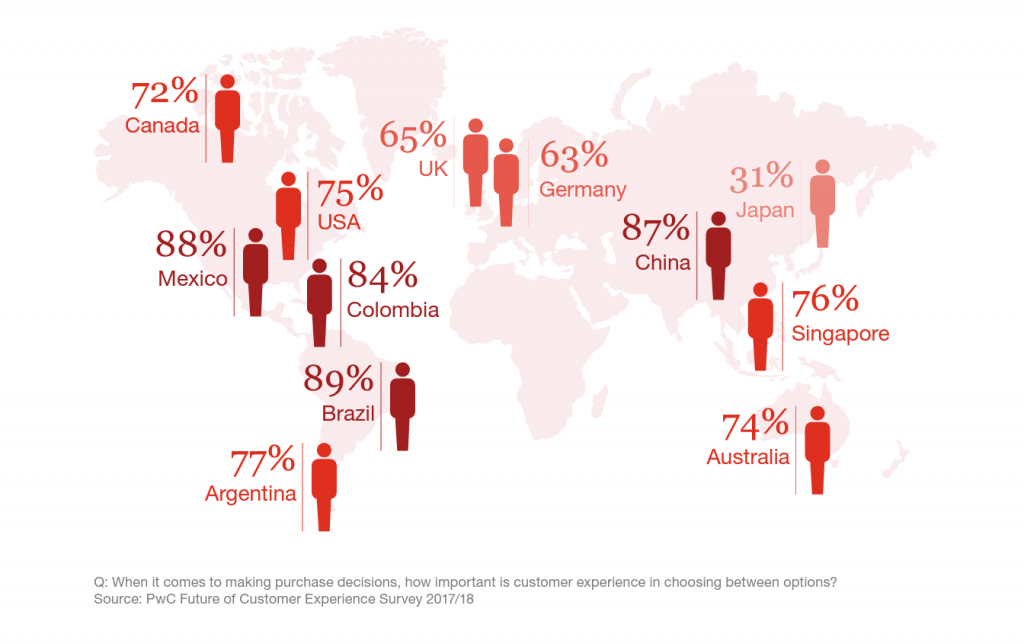
A good CX makes people loyal and helps businesses grow, while a bad one can lead to negative reviews and customers leaving for competitors. And companies know it. Most businesses call CX the key differentiator within very tight markets. It keeps people returning and spreading the good word.

Source: PWC report

The key benefits of a wholesome customer experience strategy include:

  • Loyal customers: People who have a positive experience with a brand are more likely to return for more.
  • Lifetime value: Loyal customers spend more money and purchase more frequently.
  • Word-of-mouth marketing: Satisfied customers are more likely to recommend a business.
  • Lower customer churn: Positive experience can keep customers from switching to competitors.
  • Online reputation: Positive reviews and feedback can enhance a brand’s reputation and attract new customers.

But how to make all this happen? There are many different approaches, let’s dive into some of the best ones.

1. Know Your Customers

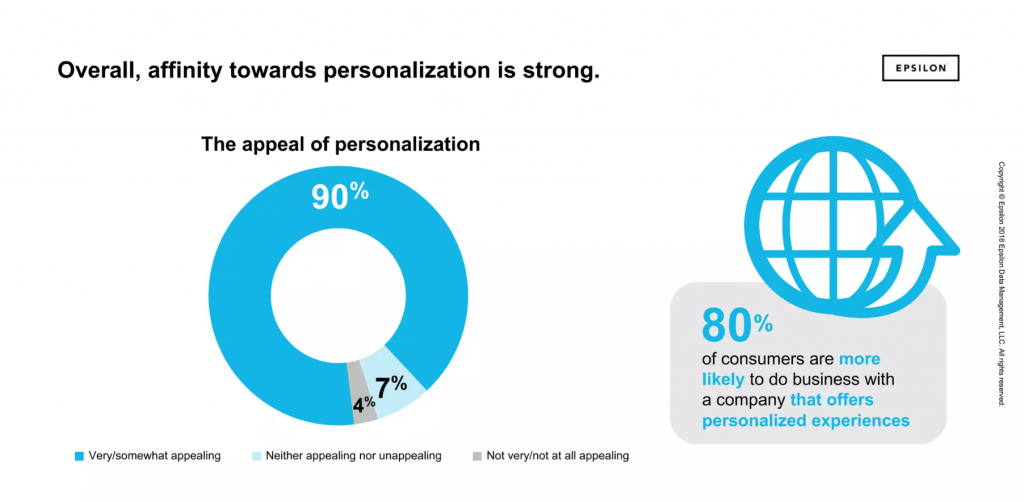
Four out of five consumers are more inclined to purchase from businesses that offer a personalized experience.

Source: Epsilon report

Hence, you need to know who you are addressing to connect and emphasize with people. This includes collecting data and studying their habits:

  • Demographic: Gender, age, income level, location, etc.
  • Psychographic: Interests, values, lifestyle, behavior, etc.
  • Purchase history: What products or services have they bought in the past, how often did they buy, etc?
  • Communication preferences: Do they prefer email, phone, or socials? What times are they most likely to engage?
  • Customer feedback: What are their pain points, what do they like about the brand?

This data can mainly be obtained automatically using analytics tools, CRMs, and social media listening tools. Except for feedback. To get it, you must ask a customer directly.

2. Collect Their Feedback

Even the fact that you ask people about their impressions helps because 77% of customers view brands more favorably if they seek out and apply feedback. And there are different ways to do it. Let’s explore some:

  • Surveys are an effective way to gather feedback from customers. They can be emailed, embedded on a website, or included in a post-purchase follow-up. Ensure they are short, straightforward, and relevant to the customer’s experience.
  • Social media like Twitter, Facebook, and Instagram are great for collecting feedback. Companies can create polls, ask open-ended questions, or respond to customer comments to gather insights.
  • Brand mentions monitoring provides a valuable understanding of how people perceive a brand on different platforms. Businesses can do it using specialized software that helps to track several channels simultaneously.
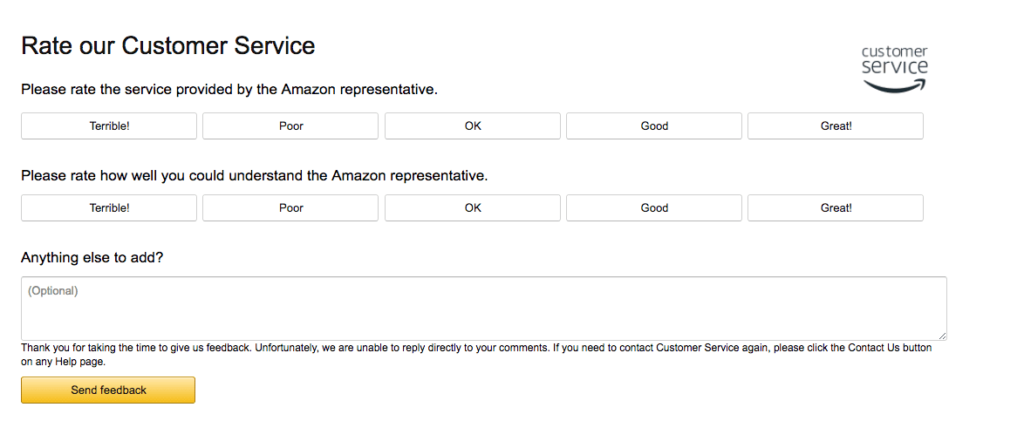
  • Feedback forms on the website or mobile app to gather customer insights. These forms can be tailored to specific products or services, and the feedback collected can help businesses make informed decisions.
Source: Amazon

The feedback gathered should impact a company’s product decisions, communication, and customer experience strategy design. Next, we want to talk about the means of delivering the CX, the most important characteristic of which is the diversity of channels.

3. Provide Multichannel Experience for All Types of Customer Behavior

Multichannel CX is a way to engage clients through multiple touchpoints. They actually expect this from companies. And it gives benefits in customer retention and customer acquisition.

First, improved satisfaction. People appreciate the convenience and flexibility of communication.

Second, it increases customer loyalty. People are less likely to switch to competitors if a company meets their communication preferences.

And, of course, greater reach. Being available everywhere makes it easier for potential customers to find a brand.

What exactly are these channels? Today, the best set is:

  • Email: Many customers prefer it for more in-depth support.
  • Phone: Some customers still prefer a call, especially when resolving complex issues.
  • Live chat: An increasingly popular channel that allows customers to communicate with businesses in real-time, making it convenient and efficient.
  • Social media: The multimedia nature of this channel provides creative ways to engage with customers.
  • Self-service: FAQs, knowledge bases, and chatbots can quickly and easily solve common problems.

What to do with such a variety? It is most convenient to use them through one platform. Bringing all interactions together in one software solution is precisely what kickstarts the multichannel CX. It also simplifies the process of its personalization, which we want to discuss further.

4. Personalize Customer Experience

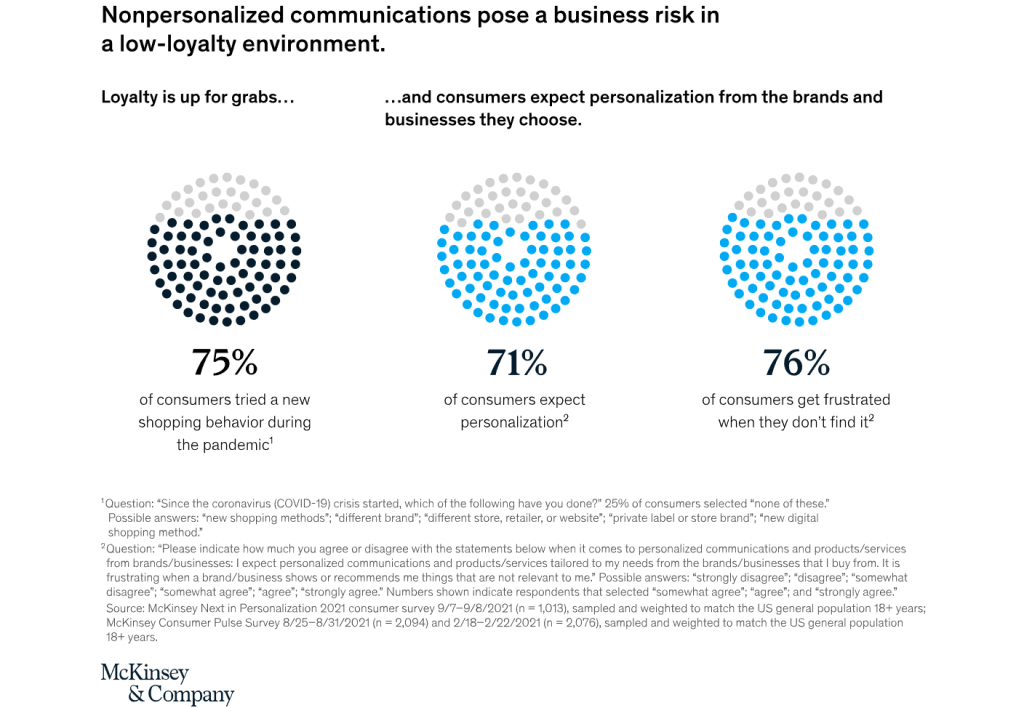
During the COVID-19 pandemic, McKinsey & Company found that 71% of consumers expect personalized interactions, and 76% are disappointed when businesses don’t deliver them. People want to feel valued and understood.

Source: McKinsey&Company

Therefore, creating a feeling that you know them personally is necessary. This is achieved through personalized content based on customer data distributed through various communication channels.

  • Recommendations: Use data from purchases and browsing history to personalize product recommendations via email or advertising.
  • Segmentation: Use the customer’s name in the subject line and body of your emails. Segment the email list based on behavior and preferences, and send tailored emails.
  • Loyalty programs: Offer personalized rewards and incentives for repeat customers through loyalty programs based on their behavior and preferences.
  • Timing: Use customer data for optimal timing of special offers, emails, etc. One example is choosing holidays, birthdays, or a time of day that is convenient for them.
  • Customer service: Service tailored to customers’ needs and preferences, such as chatbots with personalized recommendations or trained representatives.

And, by the way, customer service. This is one of the most problematic parts of the CX, as every aspect of the problem-solving process can lead to dissatisfaction. So let’s pay more attention to it.

5. Resolve Customer Queries Fast

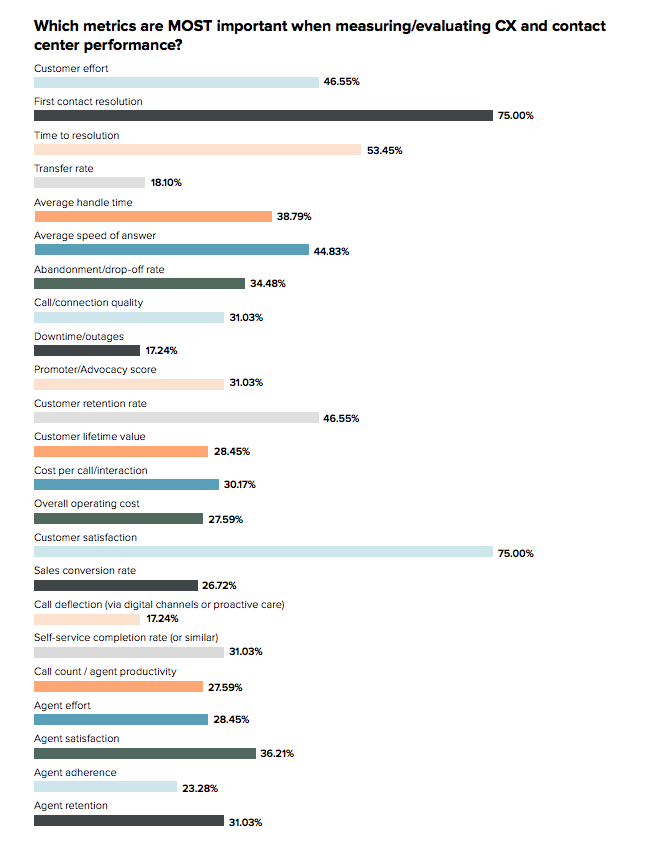
One of the most essential experiences is customer service. But what distinguishes high-quality support? Most clients cite speed of resolution as the most important factor. In particular, solving the problem at the first contact leads to the greatest satisfaction.

Source: CCW Digital

And, of course, the majority expects a quick response to the request. That’s it, there is no clear benchmark. The faster, the better.

To speed up, companies can use customer service software to automate and streamline support processes. Such products often integrate live chat, email, and chatbots.

Also, such software helps to track and analyze key metrics that impact customer experience: response time, resolution time, and first contact resolution rate.

6. Educate Website Visitors

The Harvard Business Review found that 81% of customers across industries try to solve problems on their own before contacting a representative. And again, the decisive moment is speed.

One way to help them find answers and educate them about a product is through a knowledge base, FAQ blocks, or chatbot.

  • Knowledge base: It’s an organized information collection about products or services, including tutorials, step-by-step guides, etc. It must be well-organized and easy to navigate.
  • FAQ block: It helps visitors quickly find answers without navigating multiple pages. It must be easy to read, concise, and cover the most frequently asked questions.
  • Chatbot: It’s a conversational interface that can be integrated with a knowledge base and FAQ blocks to provide a seamless experience.

Informative content helps educate visitors about a product or a service and answer their questions quickly, improving the overall experience on a website.

7. Reward Customer Loyalty

Loyalty is something that should be maintained. After all, loyalty brings businesses the lion’s profit share and is critical to improving customer retention. But there are different types of it.

  1. Those who are just happy with a product or service but can switch if they find a better deal or experience.
  2. People for whom this or that business is simply convenient, even if they have to pay more.
  3. Customers who stay with a brand because of a loyalty program.
  4. Some customers stay with a brand only because it offers the lowest price.
  5. And also, there are the biggest fans who frequently buy, give feedback, and recommend a business to others.

All these types should be taken into account, and there are a lot of examples of how businesses can reward their customers.

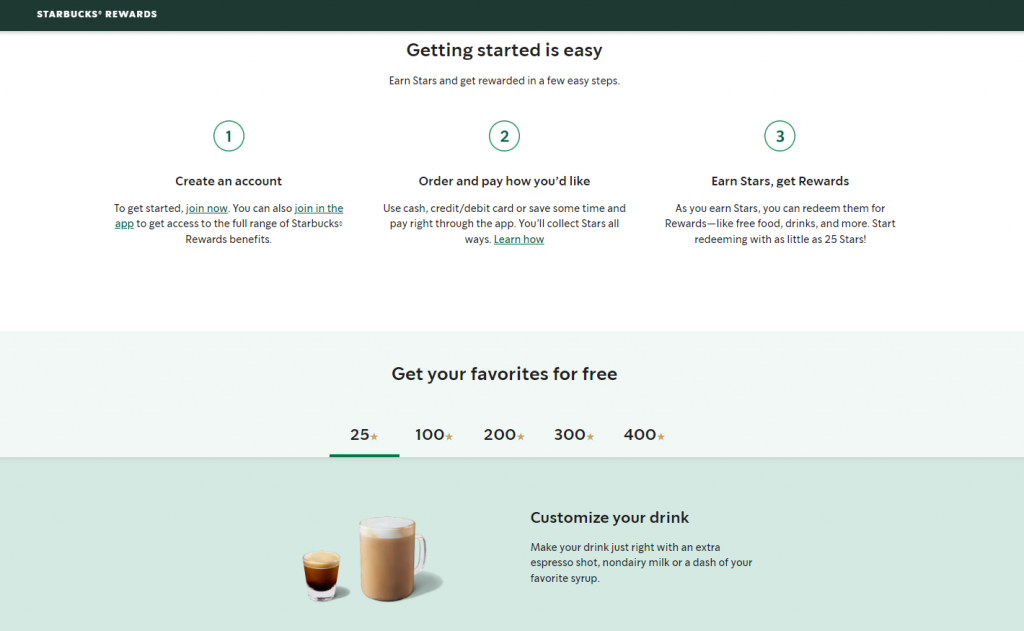
For instance, Starbucks offers a classic points-based loyalty program. Points can be redeemed for free drinks, food, etc.

Source: Starbucks

Amazon offers free two-day shipping, access to streaming, and other exclusive benefits for members who pay an annual fee.

Hilton offers exclusive benefits and rewards, such as free room upgrades, free nights, and other perks based on the number of nights stayed in Hilton properties.

8. Utilize the Force of SMM

Social networks help businesses to simultaneously address all customers, and also attract potential ones. Also, such platforms as Snapchat, Discord, or Twitch enable producing a peculiar experience through multimedia instruments.

  1. Choose the right platform: Businesses should identify the platforms their customers use most before starting socials. For instance, if your customers are primarily young adults, Instagram and Snapchat may be the best choices.
  2. Respond promptly: One of the most significant advantages of social media is its immediacy. Therefore, customers will expect a quick response if you focus on customer service in your socials.
  3. Be empathetic: In socials, sharing emotions, including negative ones, is common. But this communication is visible to everyone, so it’s crucial to respond with empathy and understanding rather than defensiveness.
  4. Provide value-added content: Socials aren’t just customer service platforms; it’s an opportunity to become valuable to customers. Share helpful tips, industry insights, and other useful information.
  5. Be creative: Socials just love funny viral stories. Companies should take advantage of this and offer creative and bold content if it fits their tone of voice.

Also, it’s worth studying the best examples to understand which SMM strategy to choose. Let’s see some.

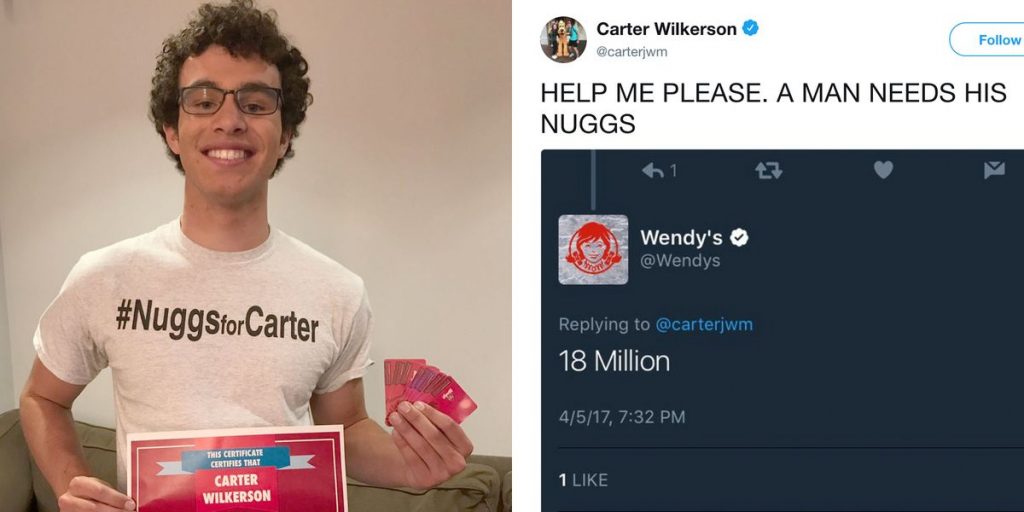
Wendy’s: The company is known for being witty and engaging, often using humor and pop culture references.

One of the most successful campaigns was the #NuggsForCarter, which started as a response to a Twitter user named Carter Wilkerson asking for free chicken nuggets for a year. The brand challenged him to get 18 million retweets to earn the prize, which went viral and even resulted in a Guinness World Record for the most retweeted tweet.

Source: Wendy’s

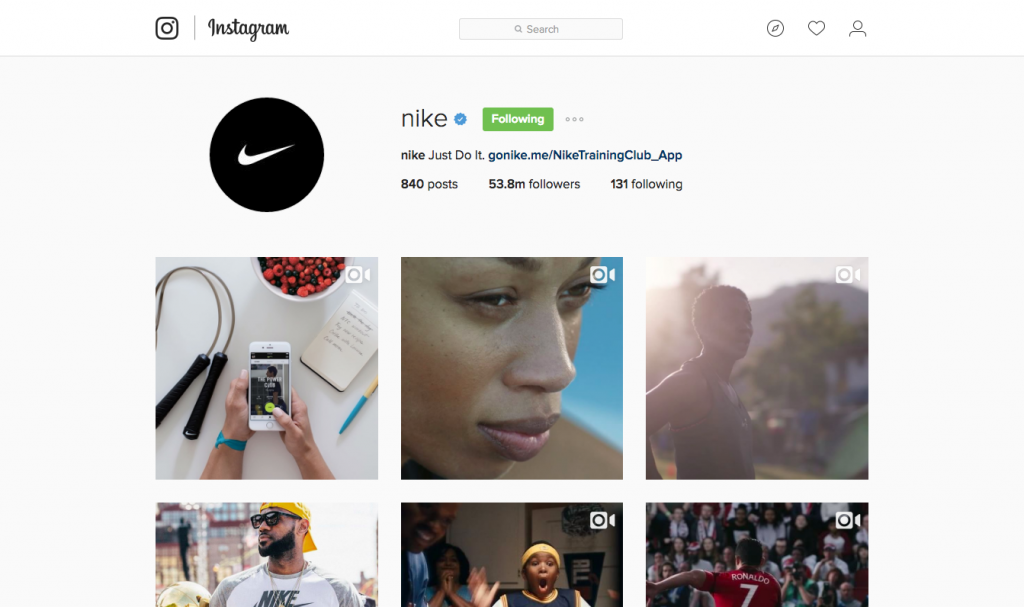
Nike: This brand uses social media to spread positive sentiments and connect emotionally with customers. They employ user-generated content extensively, encouraging people to share photos and videos of themselves using Nike products with branded hashtags.

Source: Nike Instagram page

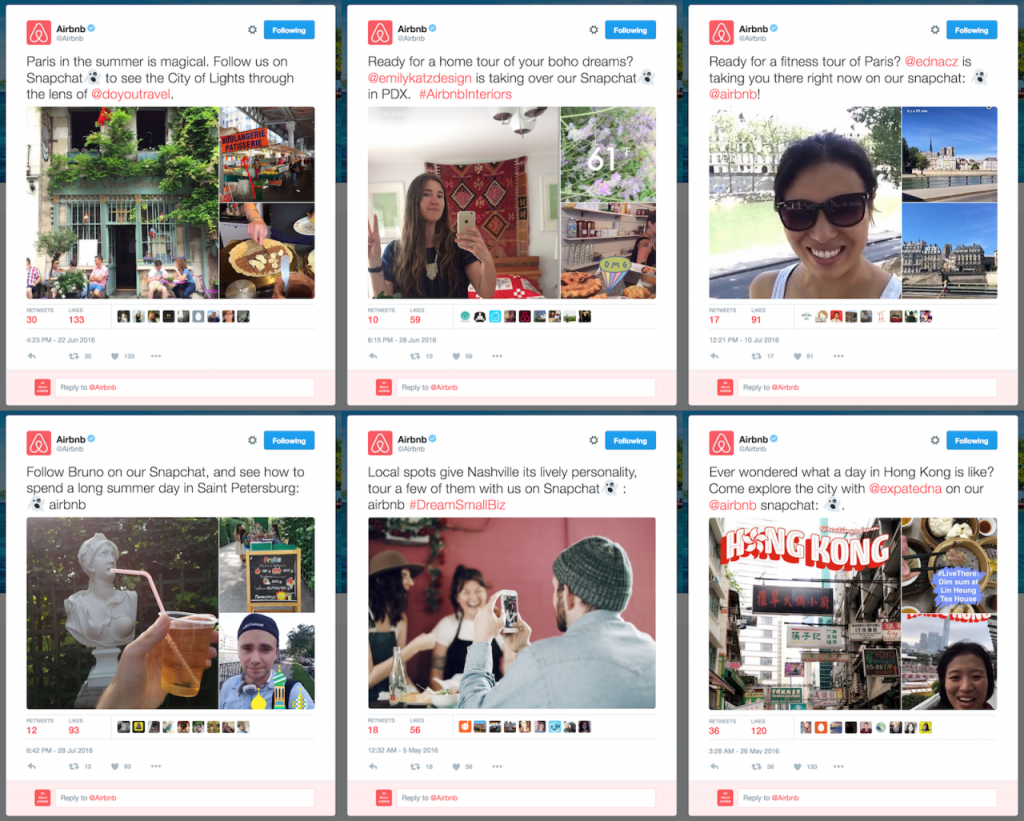
Airbnb: The company uses socials to showcase unique travel experiences and promote cultural exchange. They also have a strong customer service presence, responding quickly to customer concerns or issues.

Source: Airbnb Snapchat page

Being responsive, authentic, and personable allows companies to create strong client-brand connections and build impressive experiences.

9. Embrace Transparency

The era of fake news and data breaches makes people constantly doubt, especially regarding their money and privacy. As a result, 86% of Americans believe that transparency from businesses is currently more essential than ever.

Clear information about products, services, and company policies helps customers make informed decisions and feel confident in their choices.

One of the shining examples is the American online retailer Zappos. The company values transparency, making it a core part of its culture and communication.

Source: Zappos

As a result, they established an entire department called Zappos Insights. It offers tours, live events, and Q&A sessions with departments like customer service, user experience, and marketing. This move increased customer trust and confidence in the brand.

When companies prioritize transparency as a core value, it leads to loyalty and, ultimately, business success.

10. Focus on Employees’ Engagement and Satisfaction

Another key to a thriving business is smiling staff. When employees are happy, output skyrockets, creating a cheerful workspace that boosts excellent customer service, increasing customer satisfaction and increasing customer loyalty.

How to keep employees satisfied?

  • Professional Development. People want to grow and advance. Training and development opportunities help employees feel valued and invested in the company’s success.
  • Open Communication. It can help employees feel heard and valued. Regular team meetings or feedback forms allow people to express their thoughts and concerns.
  • Competitive Salaries and Benefits. It’s just basic. Businesses should ensure their salaries and benefits packages are competitive with industry standards.
  • Achievements & Rewards. Recognizing and rewarding employee achievements increases morale and motivation. It can be programs or just incentives for meeting goals.
  • Positive Work Environment. Businesses can offer perks like casual dress codes, flexible schedules, or team-building activities to form a positive workplace culture.

Final Thoughts

Designing a winning CX strategy takes time, effort, and dedication. However, it doesn’t end with implementing the best practices we’ve discussed. It’s an ongoing process, and staying proactive and responsive is vital.

Regularly track customer satisfaction, retention rate, lifetime value, and customer acquisition cost to ensure success. You can use tools like Google Analytics, customer feedback surveys, and social media analytics to make data-driven decisions.

Keep improving your customer experience strategies by monitoring progress and making necessary changes to attract and keep customers returning. Hard work will be worth it!

7 Ways to Get Repeat Sales from Ecommerce Customers

Ecommerce websites are trendy today. If you are trying to build an online business, it is crucial to research how ecommerce works and how to stand out from the competition. That is even more important today, where dropshipping businesses thrive. Because people have so many options, getting repeat sales from ecommerce customers becomes difficult. Luckily, we have a way to make this happen. And not just one but 7 distinctive strategies will substantially improve your business and drive sales!

1. Excellent customer service

If there is one reason why people have doubts when shopping online is that customer support is not always the best. There are situations where you have a problem with a service, the website, your shipment not getting delivered, or you are unsatisfied with the product. Reaching out to customer support is either impossible or very hard. Now you are stuck in a situation where you spent your money but did not get the product.
Here is where you can leverage your ecommerce marketing strategy to let the customers know your customer support service is on the level. The best option is to implement a live chat option where users can ask questions anytime. Also, display the email and phone number for customer support if the live chat option is unavailable. Strive to provide 24/7 customer support, and you will build a trustworthy relationship with your clients, leading to repeat sales.

An illustration of a happy person shopping online.
Make your customers happy by providing exceptional customer support to answer their questions.

2. Personalized recommendations strategy

One of the most significant benefits of online business is that it allows you to collect customer data easily. Every action on your website is stored and can be accessed through data analysis software. That way, you can track the following:

  • Customer’s purchase history
  • The amount of money they spend
  • What kind of products they often look at

You should use that data to send customers personalized recommendations. This strategy is quite common today, and it helps with improving conversions. If people are constantly surrounded by things they are interested in, they will sooner or later buy them.

Also, these recommendations help customers find other products they weren’t even aware of. For example, if a customer purchases a tea set on your website, you can send them recommendations for other items related to the tea set.

3. Improve email marketing

While on the topic of personalized recommendations, let’s also talk about email marketing. That is the best channel for informing customers about special deals, offers, or discounts. A good thing about emails is that you can easily tailor them to each customer. That is an essential strategy because it builds loyalty and creates an emotional connection between the customers and your business.

4. Implement a loyalty program

A loyalty program is the best strategy to get repeat sales from ecommerce customers. It is how you reward the most loyal clients who gladly return to your website. Many businesses see major improvements after introducing loyalty programs.

An illustration of a person shopping with a mobile phone.
Add a mobile app to your loyalty program to keep customers engaged and get repeat sales from ecommerce customers.

Loyalty programs usually work by offering special deals and promotions to repeat customers. Or, they get rewarded with points for each purchase and can spend them to earn discounts on future purchases.

Furthermore, some loyalty programs have unique products that businesses only offer to the program’s members, so not everyone has access to it. That is a fantastic incentive for customers to join the loyalty program and gain access to premium products. Per the experts from Convert More, this is the best strategy to increase your conversions and generate more sales.

5. Provide free perks

People love free stuff. It is in our nature to look for ways not to spend our money yet get what we want. As a business, you should utilize this to get more repeat customers.

For example, you could offer free shipping to all purchases. That is a fantastic benefit to buyers because they often struggle to pay more due to shipping. Before you make this move, ensure your business will not suffer financially.

One strategy is to increase the price of products to compensate for free shipping. Remember that this might also affect your customers since they must pay more now. It is crucial to find that sweet spot that will allow you to increase the prices without pushing away the customers.

An illustration of a package being sent from one person to another.
Free shipping is among the top perks that you can gift your customers.

Another option would be to make a deal with the supplier and have them ship the items to the customer free of charge. You would get them customers and charge a percentage for your service, and they would do the rest. That is how dropshipping works.

6. Collect and display product reviews and testimonials

People like to look at product reviews before they make a purchase. That is a necessary social proof that the product is high quality and will satisfy their needs. It also proves trust because other people have already purchased from that website. That means it is safe for shopping.

As a business, ask your customers to review products and submit their testimonials so that you can use them as a marketing strategy. You can even encourage them to leave reviews by offering additional perks for their next purchase. By doing this, you are also giving them another reason to shop again.

7. Do a follow-up after every sale

Just because a purchase was finalized does not mean the customer journey ends there. You must do a follow-up after each purchase to get more repeat sales. That is to ensure that the customer was satisfied, not just with the product, but with the service on your website. It shows them you care even after they have spent money.

Get repeat sales from ecommerce customers with these efficient strategies

As you can see, there is more than one way to get repeat sales from ecommerce customers. Just make sure that you always focus on their benefit, and you have nothing to worry about. Once you show your customers that you care about their needs, they will gladly return for more!

73 Dates For Your 2023 eCommerce Marketing Calendar

Last year, U.S. holiday sales reached $270 billion compared to $257 billion in 2021. The festive mood turns every fifth visitor to your website into a customer. Everything you have to do is provide a favorable shopping atmosphere: the right timing, content, and offer. 

Usually, marketers start a holiday campaign pre-production three-four months ahead of the launch date. So let’s choose the best holidays and events throughout the year to grow your online sales successfully.

Make sure you take advantage of every opportunity to engage your target audience with a comprehensive list of holidays celebrated throughout 2023. 

Let’s dive in!

But first, look at the list of eCommerce trends to consider before drafting your eCommerce calendar

  • Target the interests of the audience in your niche. 
  • Provide conversational shopping experience via live chat and chatbots on your website, socials, and messenger.
  • Launch live streams on YouTube, social media, TikTok.
  • Provide the opportunity to pay with cryptocurrency.
  • Adopt marketing automation and AI tools to provide the best possible performance of your campaigns and analyze results.

January 2023

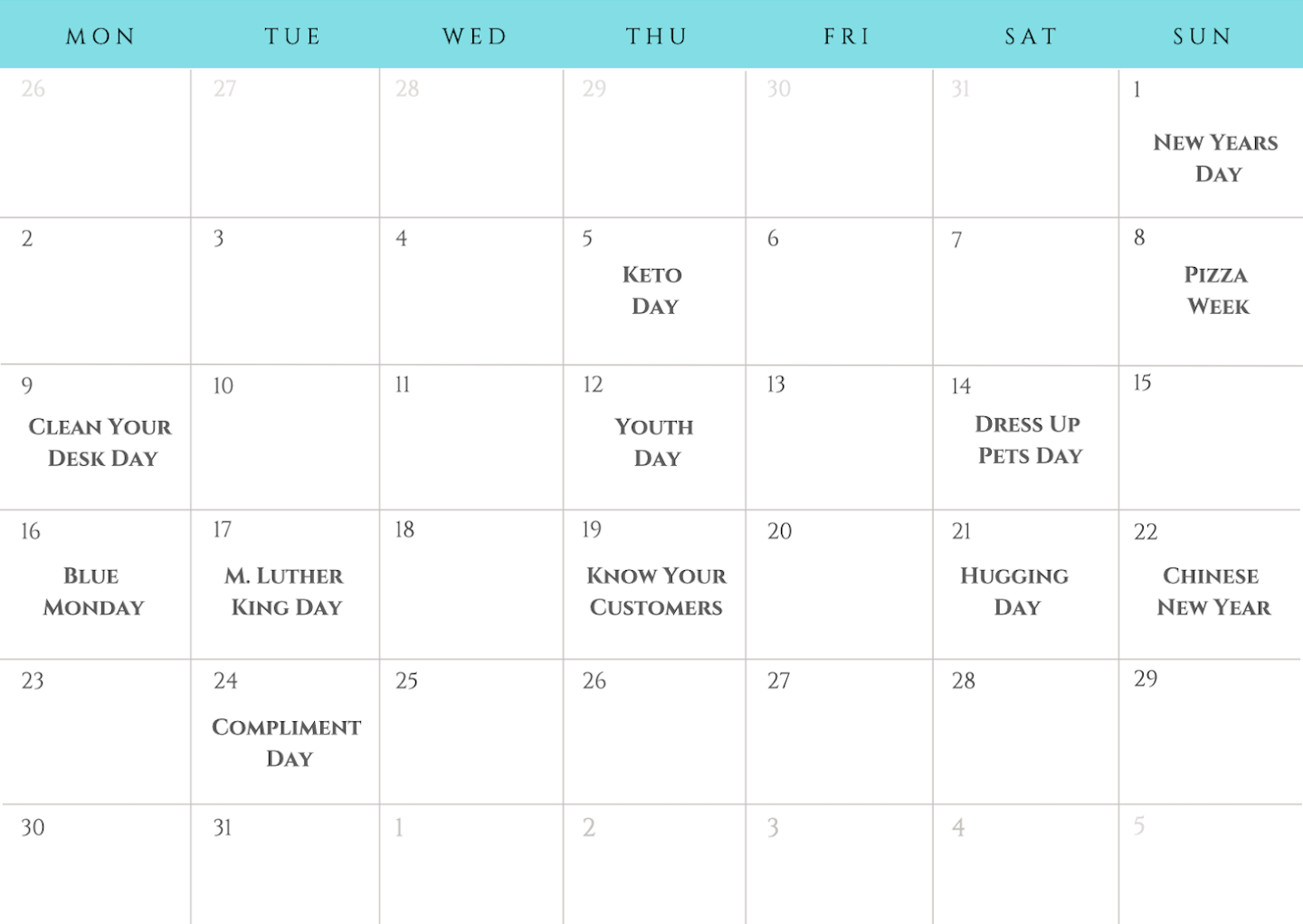
Although January is almost past, it is a month of new resolutions and a hunt for multiple sale offers. People are looking for places to spend discount cards and gift certificates. So here are a few occasions you had in January:

  • January 1. New Year’s Day. 
  • January 5. National Keto Day. 
  • January 9. Clean Your Desk Day. 
  • January 16. Blue Monday. 
  • January 17. Martin Luther King Day. 
  • January 19. Get to Know Your Customers Day. 
  • January 22. Chinese New Year 
  •  January 24. National Compliment Day 

Since we have no time machine, there is no need to describe each of them. Instead, let’s focus on the events we can benefit from👇

February  2023

  • February 1st – 28. Black History Month 

Show respect for the triumphs and struggles of African-Americans throughout U.S. history by sharing themed content, for example, the Black History Month playlist, or by engaging individuals to join relevant non-profit organizations.

  • February 2. Groundhog Day 

It’s a perfect time to play the predictions game with potential customers from Pennsylvania and Punxsutawney. This day they expect the town’s groundhog prediction for a winter duration. 

  • February 3. National Wear Red Day

If you use red in designs that day, Americans will consider it a support of heart disease awareness. 

  • February 5. Annual Grammy Awards
    It is one of the most exciting events for everyone who loves music. Use this topic in your Ad copy to catch the target audience’s attention and convert them into customers. 
  • February 12. Super Bowl Sunday

It is a good chance to get the attention of football fans from the U.S. 

  • February 14. Valentine’s Day

Europe, the U.S., the UK, and Japanese people expect eCommerce companies to advertise ideas for romantic gifts. Think well over the Valentine’s Day slogans and products to catch their attention.

  • February 17. London Fashion Week

It is a perfect occasion for fashion brands to engage the target audience.

  • February 21. Pancake Day 

It is a perfect time to launch a sale for every brand related to food and cooking, or can present its product as a pancake. Christians in the U.K. will love it.

  • February 21. Mardi Gras, a.k.a. Carnival 

This is a day of parties and dances in places colonized by the French. 

March 2023

  • March 8. International Women’s Day 

At this global holiday, people celebrate gender equality and women’s achievements in cultural, political, and socioeconomic fields. 

  • March 12. 95th Academy Awards Ceremony 

Fashion brands and souvenir shops can take this occasion to focus film lovers’ attention on celebrities’ styles or movie attributes and offer relevant items on sale.

  • March 17. St. Patrick’s Day 

On this Irish holiday, brands engage customers with green-colored content and items of all kinds. Some marketers believe that this color brings business luck in the face of new clients and sales.

  • March 19. Mother’s Day

This day is an excellent occasion for retailers to launch discounts and unique offers to potential customers in the U.K.

  • March 22. Beginning of Ramadan 

Food brands and delivery services are extremely popular among Muslim practitioners during this time.

April 2023

  • April 1. April Fools’ Day  

It is an excellent opportunity for brands targeting western audiences to show their sense of humor and get some hype. So think well over ideas to engage your customers on April Fools’ Day

  • April 7-10. Easter 

A week before this holiday, Christians used to shop for Easter eggs, gifts, and decorations to celebrate Jesus Christ’s resurrection.

  • April 11. National Pet Day

This is a perfect opportunity to grow sales for brands targeting pet owners in the US. 

  • April 20. Get to Know Your Customers Day

This event is famous for brand surveys for which customers get rewards.

  • April 21-22. Eid al-Fitr

eCommerce companies can take this chance to promote various products that can help celebrate the end of Ramadan, from food to electronics to Muslims.

  • April 22. Earth Day

Grow environmental awareness among your customers by posting relevant content, making donations, and launching giveaways.

  • April 23. World Book Day

Readers expect this day to get discounts from bookstores and apps.  

May  2023

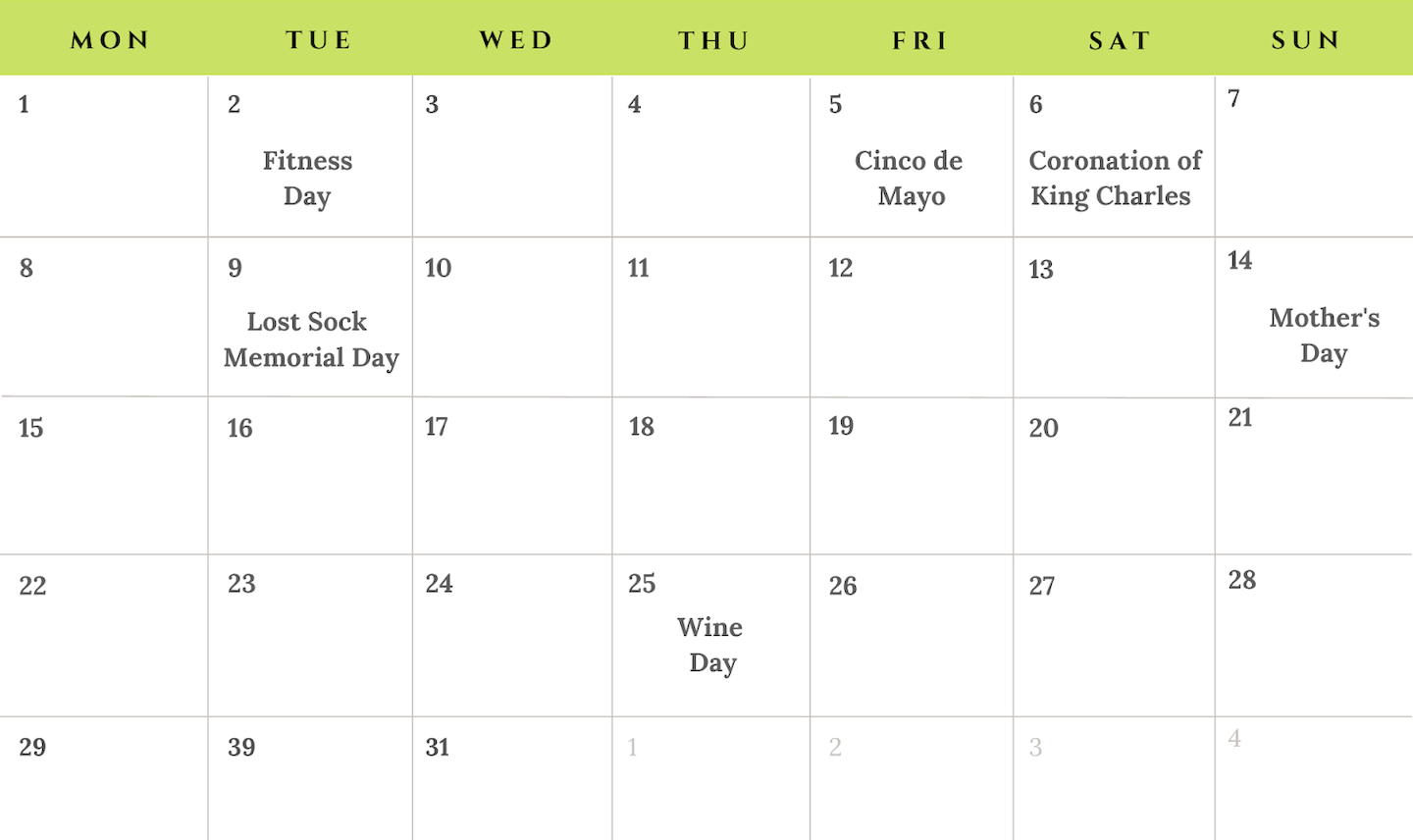
  • May 2. National Fitness Day 

This day sportswear, equipment, wellness, and nutrition brands are very popular among U.S. citizens. 

  • May 5. Cinco de Mayo

If your target audience is in Mexico, it is an excellent opportunity to show your honor to their victory over France in 1862 and promote themed products on social media.

  • May 6. Coronation of King Charles 

This is a great promotional opportunity to reach audiences in the UK. 

  • May 14. Mother’s Day 

The UK celebrated it on March 19. Now, it’s a turn for the rest of the world. 

  • May 25. Wine Day 

Wine retailers, take your chance to boat revenue by targeting U.S. wine lovers. For others, it is one more opportunity to engage with followers on social.

June 2023

  • 1-30 June. Pride Month 

If you want to establish a good connection with the LGBTQ+ community, support them on your website or socials with relevant posts or promotions. 

  • June 5. World Environment Day 

Use this date to grow the environmental awareness of your audience if you missed a similar occasion in the previous months. 

It is a globally known event to launch family- or friends-themed promotions.

  • June 17. Flip Flop Day

What can be a better occasion for the footwear and seasonal stores to boost the flip-flops and relevant cloth sales than the beginning of summer? 

  • June 18. Father’s Day

Yes, now the father’s turn to celebrate. Greet them with relevant promotions or posts on social media. 

  • June 29. Camera Day

With this event, you can target almost everyone because, secretly or in public, everyone thinks they are a great (selfie, cat, food, nature photographer.) So, for example, engage people to share visual masterpieces with your product to get a prize.  

July 2023

  • July 4. Independence Day 

This famous holiday fits every brand, so take your chance to reach American audiences.

  • July 7. Chocolate Day

After Valentine’s Day, this is a second opportunity for sweets retailers to target chocolate fans globally. 

  • July 14. Bastille Day

Reach out to French customers with promotions under the liberty and equality concept devoted to the French Revolution.

  • July 20. FIFA Women’s World Cup start

Target sports fans all over the world. 

  • July 30. International Day of Friendship

One more opportunity for brands that skipped June Best Friends Day to engage people to present their friends some gifts. 

August 2023

  • August 8. International Cat Day

In addition to standard discounts, you can use themed content to promote cat adoption and animal activism.

  • August 21. World Senior Citizens’ Day 

Use discounts to raise awareness of the specific issues impacting senior citizens. 

  • August 26. International Dog Day

Online pet stores, you know what to do: themed content, competitions, giveaways for the best pet’s photo, and discounts for fluffy paws owners. 

  • August 28. National Bow Tie Day

Fashion, apparel, or clothing brands offer discounts to consumers who publish their fav bow tie on socials.

September 

  • September 1. Return to School 

At the start of an academic year in the U.S., brands related to education and school launch special offers: tech, office, and cloth discounts.

  • September 4. Labor Day

Show your honor of laborers with relevant offers for consumers in the US and Canada. 

  • September 17. Oktoberfest start

Germans and everyone who loves this beer festival can’t ignore themed product gifts and discounts.

  • September 23. End of Summer

It’s the best day for the cloth retailers to sell rest of the summer collection. 

  • September 27. World Tourism Day

Since 1980, brands that offer relevant products launch themed sales globally on this day.

October 

  • October 1. Coffee Day

There are so many people who love coffee around the globe. Use this occasion to reach out to them. 

  • October 4. Animal Day

Have you missed cat’s and dog’s days? Here is one more chance to celebrate animals’ rights and welfare globally.

  • October 31. Halloween

Starting with Americans, Halloween is a holiday celebrated globally today. Spooky designs, marketing copy, and Trick-or-Treating are only some topics to engage shoppers.

November 

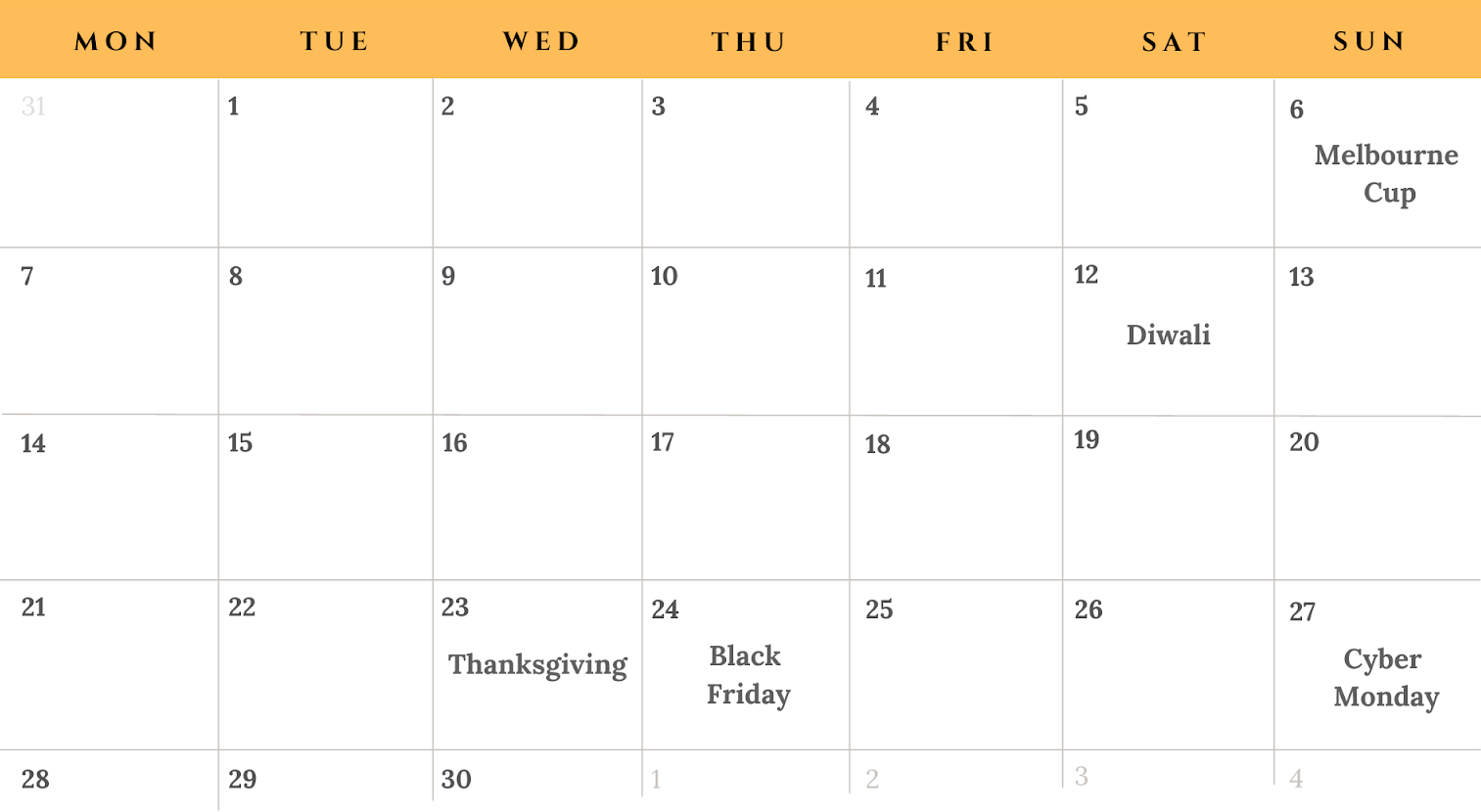
  • November 6. Melbourne Cup

It is an opportunity for food and beverage delivery apps to reach horse racing fans in Australia.

  • November 12. Diwali

This is an Indian religious holiday when people buy accessories, clothing, and decorations.

  • November 23. Thanksgiving

Turkey, cranberry sauce, and pumpkin pie are the most famous attributes of this American holiday. Use these visuals to get people into a holiday spirit. 

  • November 24. Black Friday

It is the holiday of the best deals on the web. Naturally, people expect brands to advertise significant discounts and free shipping.

  • Cyber Monday — November 27

Those who skipped the Black Friday deals enjoy the opportunity to get great deals from online retailers.

December 

  • December 7. Hanukkah

Here is when the 8-day Hanukkah starts. People of the Jewish community would like to buy traditional food like potato pancakes or donuts and small gifts online.

  • December 14. Free Shipping Day

It is the last opportunity for customers to shop for Christmas. This holiday fits all customers and brand types.

  • December 25. Christmas

People don’t shop on this day. They did this two weeks before. On December 25, Christians celebrate the birth of Jesus. So you can catch their attention with Christmas-themed activities that generate excitement.

  • December 26. Kwanzaa 

It is the start of 7-days honoring the African heritage in the African-American community. People share gifts and spend time together, so you can engage them with Kwanzaa-themed deals.

  • December 31. New Year’s Eve

The best time to inspire people to meet their goals with the help of your products.

To sum up 

Now you have a list of dates to choose from. But not all of them are relevant to your target audience. To build an ideal eCommerce content calendar for 2023, consider the days most significant to your customers. 

Who do you hope to draw in and introduce to your brand and products? You must identify your target market to create the finest marketing plan.

Consider the qualities of your typical clients. They, who? 

  • What is their occupation, income, gender, and age? 
  • What are their interests, pastimes, and purchasing behaviors? 
  • What inspires your customer personas to acquire your items, and where do they come from? 

Once you’ve defined those traits, you’ll clearly know who to target when promoting holidays and personalized goods. 

FAQ

An eCommerce marketing calendar is a list of all possible industry events and holidays created to plan your marketing campaigns, projects, and sales strategies during a year. 

  1. It is a perfect tool for managing your team’s time and resources.
  2. The in-time marketing campaign pre-production brings better results. 
  3. Your marketing strategy is always flexible. You can update it without losing the next campaign’s quality.

The best season to focus your marketing campaign plan is winter. But there are the most popular seasonal campaign periods marketers should use –– Valentine’s Day, Easter, Halloween, and Christmas.

Usually, people have additional days off on federal holidays, which is a perfect occasion to exchange gifts with friends, colleagues, or family. Brands know that and motivate consumers to buy with free shipping and discounts. So yes, these dates are worth your attention too.