






Why customer segments matter more than ever
Targeting the right people with the right message has become harder for eCommerce brands. Pixel data is unreliable, third-party cookies are disappearing, and privacy changes have reduced the accuracy of platform targeting.
Conversion rates continue to drop. Customer acquisition costs keep rising.
Yet most brands still use outdated targeting methods instead of building meaningful customer segments.
The strongest alternative is first-party segmentation, a strategy that answers the essential question many brands now search for:
What is customer segmentation and why does it matter for eCommerce?
Customer segmentation gives brands control over their targeting instead of relying on incomplete ad platform signals. It’s more accurate, more profitable, and works across every channel.
What is customer segmentation?
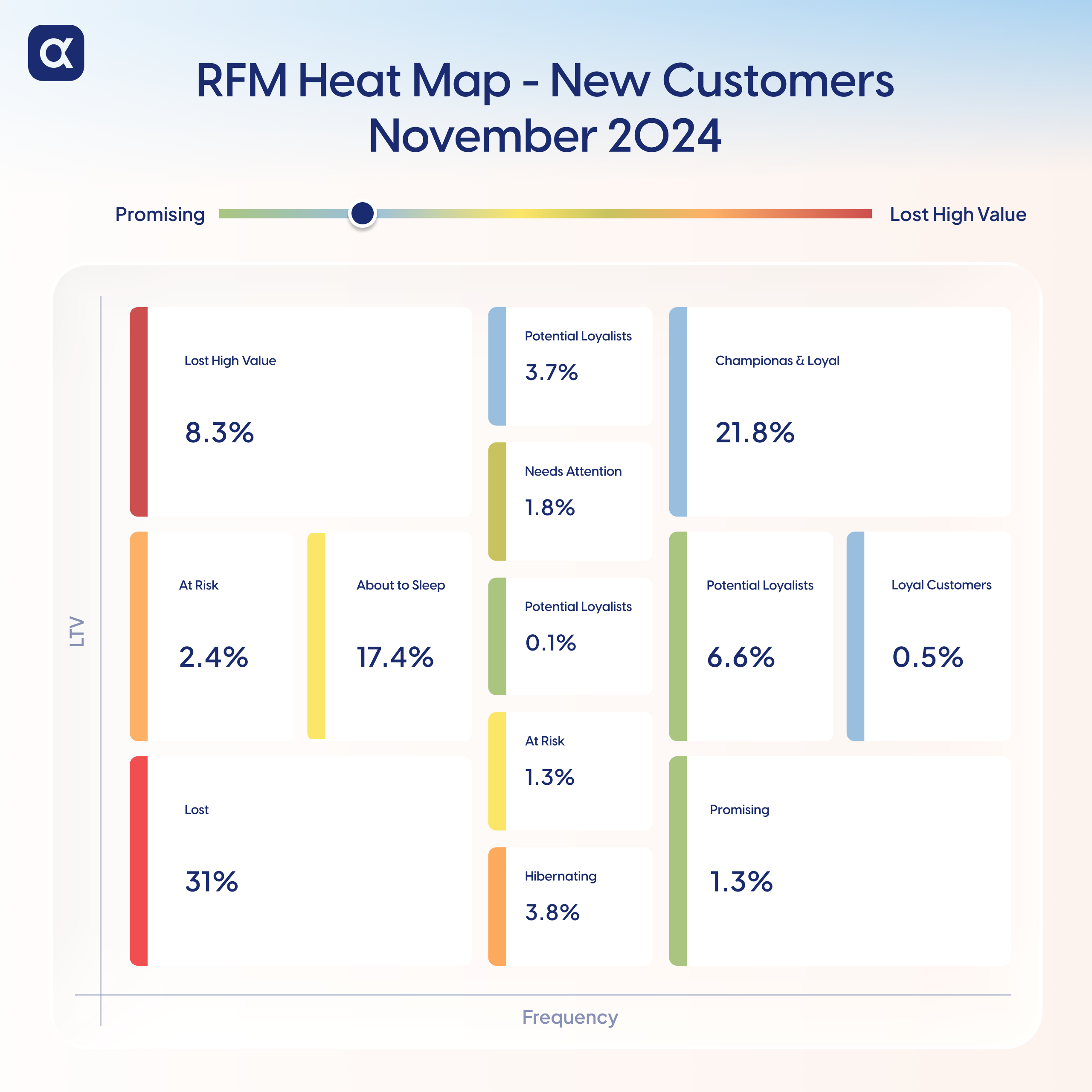
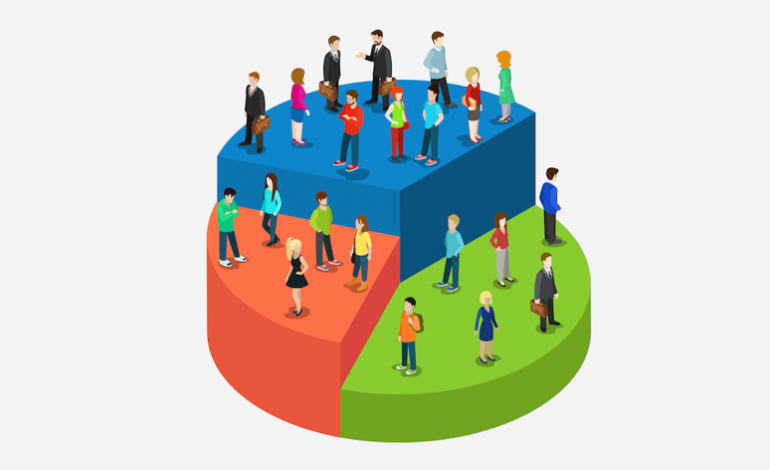
Customer segmentation is the process of dividing your audience into groups based on behavior, purchasing patterns, lifecycle stages, and product interest. This form of customer market segmentation uses real store data rather than guesswork.
Effective customer segmentation analysis helps eCommerce brands understand:
- who buys most often
- who spends the most
- who is likely to repurchase
- which products drive repeat orders
- which customer segment is most profitable
Throughout this guide, we’ll look at customer segmentation examples that eCommerce brands use to increase retention, reduce acquisition cost, and improve ROAS across every channel.
1. Customers who are likely to purchase soon
Among all customer segments, this is one of the most profitable.
Timing is everything, target customers too early and you waste budget; too late and they may buy elsewhere.
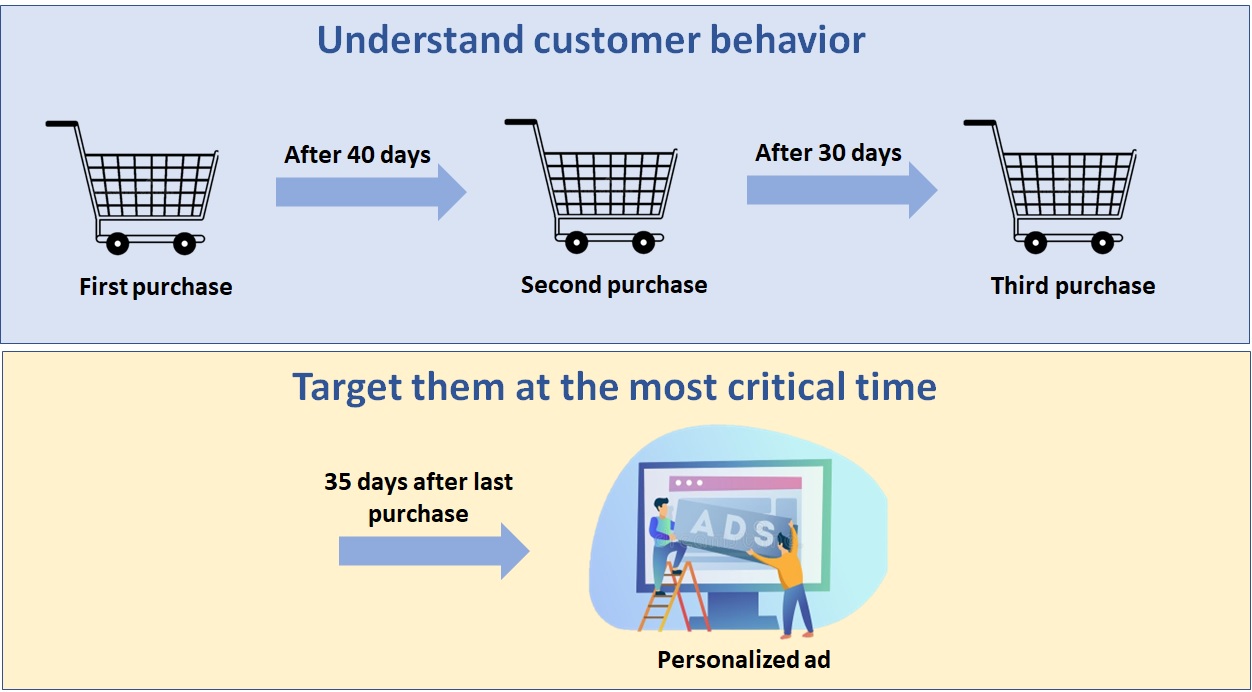
This customer segment is built using Average Repurchase Frequency, which tells you exactly when a customer is most likely to buy again.
What is repurchase frequency?
It’s the average number of days between a customer’s purchases.
Example:
- Order 1 → Order 2 = 40 days
- Order 2 → Order 3 = 30 days
- Average = 35 days
This is a perfect customer segmentation example because it uses real behavior to predict future sales.
Why this segment works
- Highly accurate timing
- Higher conversion rates
- Increased LTV
- Fewer wasted impressions
You target each customer at the right moment based on their individual shopping behavior, something no pixel or cookie can match.
2. Customers likely to repurchase specific products
This customer segment focuses on identifying what each customer will repurchase next.
It’s ideal for brands selling consumable or frequently replenished products like supplements, skincare, baby products, cleaning supplies, or apparel basics.
How to build this segment
Store data reveals product-specific purchase cycles.
Example:
Daniel buys diapers every ~75 days.
You retarget him at 70–75 days with diaper-focused ads.
This is a more advanced form of customer segmentation analysis, because you’re segmenting based on product-level patterns, not just customer-level timing.
Why this segment performs well
- Accurate product recommendations
- Highly relevant retargeting
- Higher average order value
- Stronger retention loops
Every product has its own lifecycle. Customer segmentation ensures your ads match those cycles perfectly.
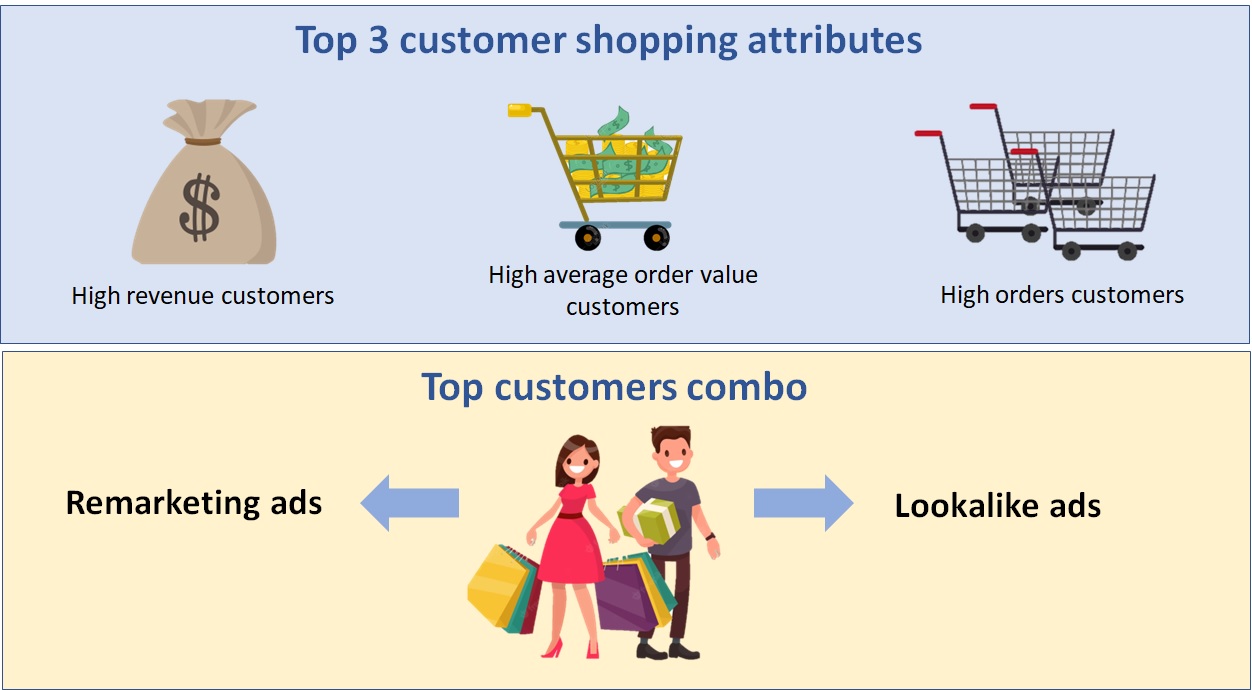
3. Top customers (your most profitable customer segment)
Some customers contribute far more profit than others.
Your “Top Customers” segment includes people who:
- spend the most
- buy the most often
- have the highest lifetime value
These are the VIP customers of your store.
Why this customer segment is essential
- Highest conversion rates
- Higher AOV
- Most responsive to offers
- Ideal for upsells and cross-sells
They also power strong lookalike audiences, turning your best customers into your best acquisition engine.
This represents another powerful customer segmentation example because it directly predicts revenue impact.
How to create customer segments manually
If done manually, customer segmentation analysis requires:
- Exporting customer data
- Sorting by purchase behavior, timing, and spend
- Creating lists for each customer segment
- Uploading to Google and Meta
- Refreshing every 2–3 weeks
This works, but becomes tedious and error prone as your store grows.
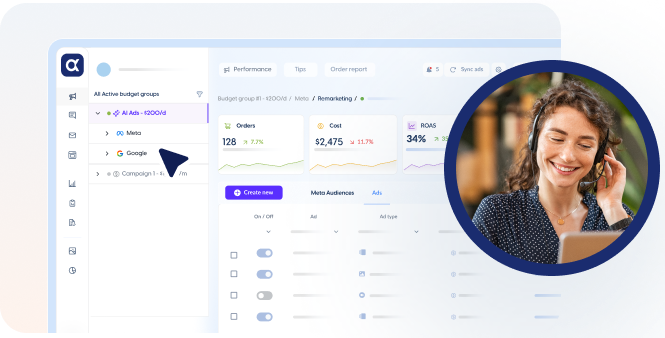
A smarter way: automated customer segmentation with AdScale
Instead of exporting spreadsheets and manually building audiences, AdScale automatically generates eCommerce customer segments using:
- first-party store data
- persona discovery
- product behavior analysis
- lifecycle patterns
- revenue contribution by segment
AdScale creates ready-made high impact customer segments such as:
- Likely to Purchase Soon
- Likely to Repurchase Product X
- Top Customer Combo
- Hidden Personas Not Yet Targeted
- Churn-Risk Customers
- High-Margin Buyers
These segments update daily, sync automatically to Google + Meta, and can also be used in email and SMS.
You can also create custom segments using AdScale’s Audience Builder, giving you full control over your segmentation strategy without spreadsheets or manual uploads.
Conclusion
Customer segmentation is now a must-have for eCommerce growth.
When platform data becomes less reliable, first-party customer segments provide stability, accuracy, and higher performance.
By understanding:
- who your best customers are
- when they repurchase
- what they repurchase
- how they behave over time
you gain a powerful competitive edge across acquisition, retention, and personalization.
With AdScale’s automated segmentation and persona intelligence, eCommerce brands can scale segments instantly, without manual work or data expertise.
FAQs Customer Segments
Customer segments use first-party data instead of cookie-based signals, making them more accurate and profitable across all channels.
Customer segmentation is the process of dividing customers into groups based on behavior, spend, lifecycle, and product patterns.
Do I need to use all customer segments?
AdScale automates customer segmentation analysis, persona discovery, and campaign syncing across Google, Meta, email, and SMS.
All you need is first-party data from your eCommerce platform. AdScale handles the rest automatically.

 Shopify
  WooCommerce
  PrestaShop
  Magento
  BigCommerce
  Opencart
  Wix
Wix 



 ,
,